- Quick Answer
- Are Low-Calorie Snacks Always the Best Choice?
- How to Choose a Snack That Actually Satisfies You
- Best Snacks for Different Situations
- Protein-Rich Options
- High-Volume Fruit and Vegetable Options
- Fibre-Rich and Whole-Grain Options
- Snacks Around Exercise
- How Many Calories Should a Snack Have?
- When Should You Have a Snack?
- Making This Work for Your Actual Life
- Snacks and Weight Management: What Actually Matters
- Handling Common Snacking Challenges
- Related Posts
Key Takeaways
- Low-calorie doesn’t automatically mean satisfying the most useful snack is one that helps manage hunger without leaving you reaching for another snack shortly afterwards.
- Protein, fibre, and volume can make snacks more filling while keeping calorie intake relatively modest.
- Snacking is optional, not mandatory. Some people benefit from a planned snack between meals, while others do well with three balanced meals.
- Preparing satisfying options in advance can make it easier to respond to hunger without relying on convenience or willpower.
The lowest-calorie snack isn’t necessarily the most satisfying. A snack that leaves you hungry again shortly afterwards may be less useful than a slightly more substantial option that provides protein, fibre, or food volume.
This guide focuses on how to choose low calorie snacks that are satisfying enough to make the time between meals easier to manage without treating snacking as a requirement or turning it into a weight-loss prescription. It covers a framework for evaluating any snack, options organised by what you actually need, and practical strategies for making the satisfying choice the easy one.
- Quick Answer
- Are Low-Calorie Snacks Always the Best Choice?
- How to Choose a Snack That Actually Satisfies You
- Best Snacks for Different Situations
- Protein-Rich Options
- High-Volume Fruit and Vegetable Options
- Fibre-Rich and Whole-Grain Options
- Snacks Around Exercise
- How Many Calories Should a Snack Have?
- When Should You Have a Snack?
- Making This Work for Your Actual Life
- Snacks and Weight Management: What Actually Matters
- Handling Common Snacking Challenges
- Related Posts
Quick Answer
The most satisfying low-calorie snacks often combine protein, fibre, or high-volume foods such as Greek yogurt with berries, hard-boiled eggs, or vegetables with hummus. Protein and fibre can support satiety, while high-water foods such as fruit and vegetables provide greater food volume for relatively few calories. Pre-portioning snacks in advance is one of the more effective ways to make the satisfying option the convenient one.
Are Low-Calorie Snacks Always the Best Choice?
Not necessarily. A 100-calorie snack that leaves you hungry again within the hour often leads to a second snack at which point the low calorie choice has cost more, in both calories and convenience, than a single more substantial option would have.
Snacking itself is optional, not mandatory. For some people, a planned snack helps bridge a long gap between meals. For others, three balanced meals are genuinely sufficient, and adding snacks on top simply increases total intake without adding much satisfaction. The goal isn’t to snack as often as possible, it’s to choose one when you actually need it, and make that choice count.
How to Choose a Snack That Actually Satisfies You
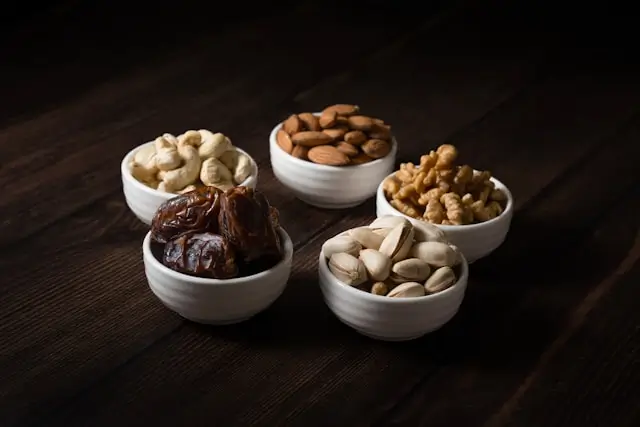
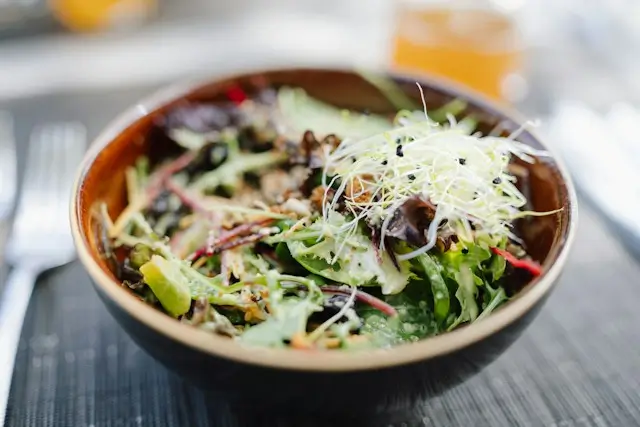
Foto by Naveena V on Unsplash
Before reaching for anything, four questions are more useful than the calorie count alone:
Does it contain protein? Protein is generally considered one of the more satiating nutrients and may be particularly useful when there is a longer gap before your next meal.
Does it contain fibre? Fibre-rich foods slow digestion and tend to extend fullness, alongside supporting digestive health generally.
Does it provide volume? Foods with high water content most fruits and vegetables let you eat a larger portion for relatively few calories, which matters for how full a snack actually feels.
Will you actually enjoy eating it? A snack that looks ideal on paper but leaves you unsatisfied often leads to eating again shortly after which defeats the purpose regardless of how perfect it looked.
Best Snacks for Different Situations
If you’re genuinely hungry
Greek yogurt with berries, cottage cheese with fruit, hard-boiled eggs, or an apple with almond butter options combining protein or fat with fibre tend to hold hunger off longest.
If you want something crunchy
Air-popped popcorn, roasted chickpeas, or vegetables with hummus genuine crunch without relying on refined, low-satiety options like chips.
If you want something sweet
Berries, frozen grapes, or Greek yogurt with cinnamon natural sweetness with fibre and nutrients rather than added sugar alone.
If you need something portable
Hard-boiled eggs, whole fruit, or portion-controlled nuts minimal prep, no utensils required.
Protein-Rich Options
Protein-rich snacks can be particularly effective for supporting fullness, especially when combined with fibre or high-volume foods.
Greek yogurt with berries roughly 120–180 calories depending on the yogurt and portion. Choose plain to avoid added sugars, then add cinnamon or a small drizzle of honey.
Hard-boiled eggs approximately 70 calories each, portable and easy to prepare in advance. Keep refrigerated and follow normal food-safety guidance for storage time.
Turkey or chicken breast rolled around cucumber spears around 90–120 calories for 3 ounces of lean poultry, with genuine crunch.
Cottage cheese roughly 80–100 calories with about 12–14g of protein per half-cup, depending on fat content. Works savoury (cherry tomatoes, basil) or sweet (peaches, a touch of vanilla).
High-Volume Fruit and Vegetable Options
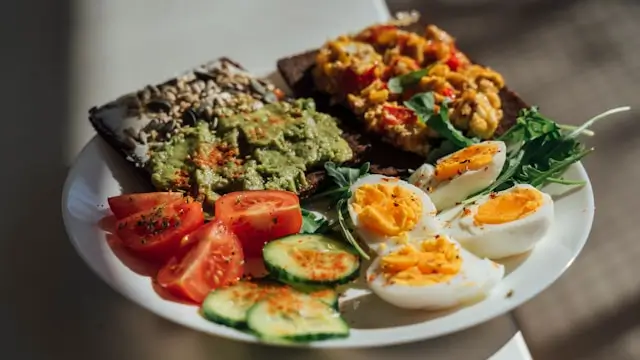
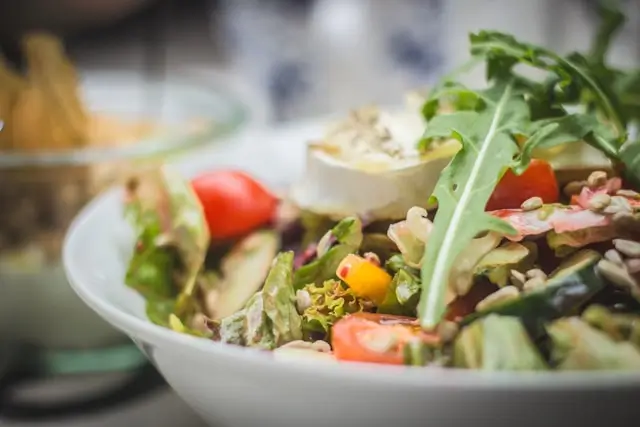
Foto by Kankan on Unsplash
Whole fruit provides naturally occurring sugars alongside fibre, water, vitamins, and minerals making it nutritionally different from highly processed sugary snacks, even when the calorie counts look similar on paper.
Apple with a tablespoon of almond butter approximately 150–220 calories, combining fibre and natural sweetness with protein and healthy fat.
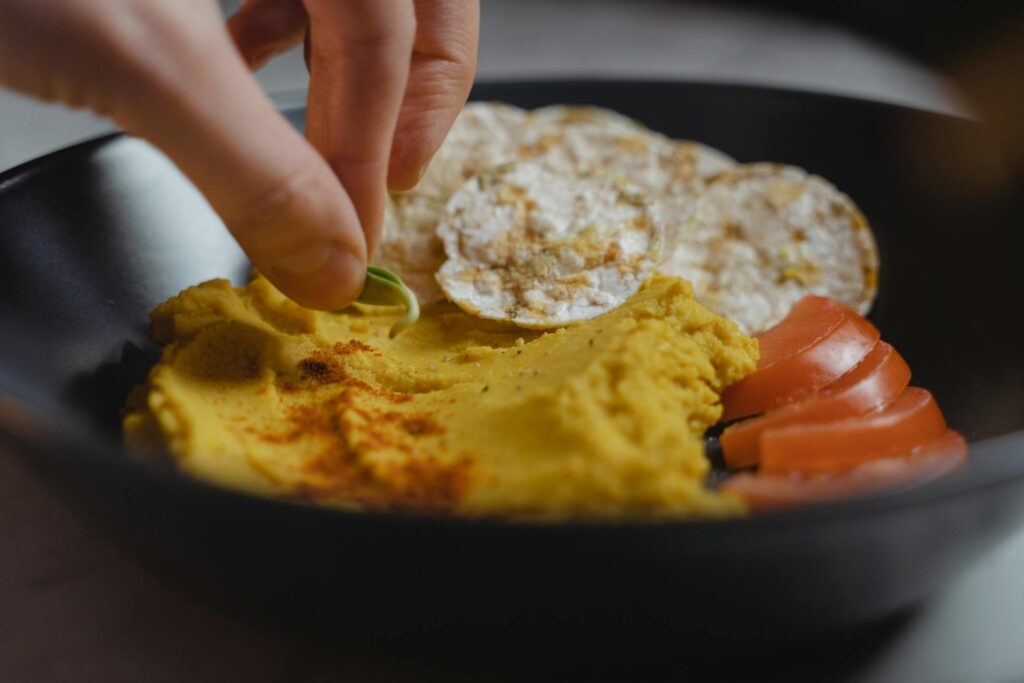
Carrot sticks with hummus roughly 90–130 calories for 10 baby carrots with 2 tablespoons of hummus, with fibre from both and plant protein from the chickpeas.
Berries around 45–65 calories per cup depending on variety, with substantial antioxidant content.
Watermelon or cantaloupe high water content allows generous portions for relatively few calories, roughly 80–100 calories per 2 cups cubed.
Cherry tomatoes with sea salt and cracked pepper approximately 50–70 calories for 20 tomatoes, savoury and genuinely satisfying.
Fibre-Rich and Whole-Grain Options
Air-popped popcorn around 90–120 calories for 3 cups, whole grain with a satisfying crunch. Nutritional yeast, garlic powder, or a light parmesan dusting add flavour without much added calorie cost.
Rice cakes roughly 35–40 calories each, functioning as a base: mashed avocado with everything bagel seasoning, or ricotta with sliced strawberries.
Overnight oats in small portions, approximately 130–170 calories for a quarter cup of rolled oats with half a cup of unsweetened almond milk, left overnight. Add chia seeds for extra fibre.
Whole grain crackers with low-fat cheese look for crackers with at least 3g of fibre per serving, paired with string cheese or a cheese wedge.
Roasted chickpeas roughly 100–140 calories for a quarter cup, with genuine crunch, protein, and fibre.
Calorie estimates vary meaningfully by brand, portion size, and preparation treat these as general ranges rather than fixed values.
Snacks Around Exercise
Before exercise, a small combination of carbohydrate and protein a banana with a tablespoon of peanut butter is a common, practical option that provides fuel without heaviness.
After exercise, protein alongside carbohydrate can support recovery, particularly after longer or more demanding sessions a protein shake with fruit, or cottage cheese with berries, both work well. Exact timing matters less than meeting your overall nutrition needs across the day.
How Many Calories Should a Snack Have?
There is no universally appropriate calorie target for a snack. Individual needs depend on age, body size, activity level, overall diet, and the time between meals for some people a small snack is enough, others may need something more substantial. Rather than aiming for a fixed number, choose a portion that provides enough protein, fibre, or volume to meet your hunger without unnecessarily adding to your overall intake.
When Should You Have a Snack?
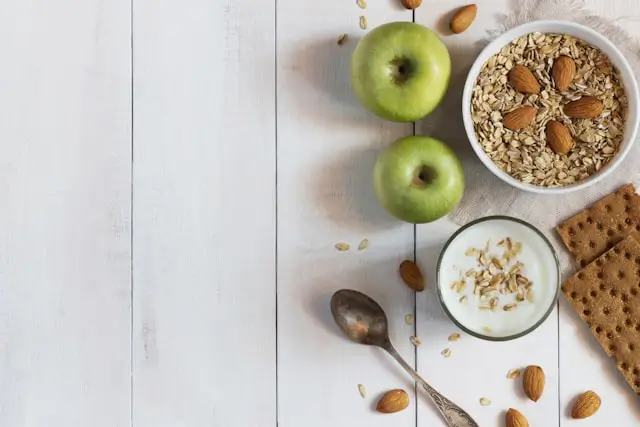
Foto by Elena Leya on Unsplash
There’s no universally ideal snack time. A more useful approach is considering your own hunger, schedule, activity level, and the time until your next meal, rather than a fixed clock-based rule. If you regularly become very hungry between lunch and dinner, a planned snack in that window may help. If you’re not hungry, there’s no requirement to eat simply because it’s been a few hours.
Making This Work for Your Actual Life
Theory doesn’t help if it doesn’t fit your schedule. Include snack prep in your weekly meal prep thirty minutes washing vegetables, portioning nuts, and assembling grab-and-go options pays off every time hunger strikes and convenience becomes the deciding factor. Convenience drives behaviour more reliably than intention does: if the healthy option isn’t visible and ready, the less healthy one usually wins by default.
Keep backup snacks in your car, desk drawer, and gym bag. Non-perishables individual nut butter packets, a protein bar with a short ingredient list, dried fruit prevent the lower-quality choices that show up when nothing planned is available.
Distinguishing hunger from habit: before reaching for a snack, pause and check in with yourself are you physically hungry, or seeking distraction from boredom or stress? This isn’t about judgment; recognising the actual trigger simply helps you decide whether you need food, a break, or a different kind of response. If stress, boredom, or sadness is driving the urge to eat, naming that can help you choose deliberately rather than by default.
Snacks and Weight Management: What Actually Matters
For weight management, overall dietary pattern matters more than whether you snack at all. A low-calorie snack can be useful when it helps meet genuine hunger and fits within your overall dietary needs. Snacking that heads off extreme hunger before a meal can support better portion control overall; snacking driven mainly by boredom or habit, regardless of how “low calorie” the choice is, tends to work against that same goal.
Handling Common Snacking Challenges
Social situations are a common obstacle when everyone around you is eating higher-calorie options, sticking with your own choice takes some confidence. Bringing your own snack to a gathering, or eating something satisfying beforehand, reduces the odds of arriving genuinely hungry.
Boredom and emotional eating: if boredom, stress, or emotional discomfort repeatedly trigger eating when you’re not physically hungry, simply choosing a lower-calorie snack may not address the underlying pattern. In those moments, it can help to pause and identify whether you need food, a break, movement, or another form of support.
Budget: none of this requires specialty products. Basic produce, eggs, and pantry staples form the foundation. Buying in bulk and portioning at home Greek yogurt, nuts, seeds, and whole grains typically costs less per serving than pre-packaged singles.
Related Posts
- Why Can’t I Lose Weight? 7 Hidden Reasons
- Slow Metabolism Symptoms: Causes, Signs, and Evidence-Based Strategies
Choosing a satisfying low-calorie snack isn’t about finding the lowest possible number. It’s about finding an option that provides enough protein, fibre, or volume to meet your hunger and fits naturally into your overall eating pattern. A little planning and the right foods within reach can make that choice much easier.