This article was developed after reviewing randomised controlled trials, systematic reviews, and guidance from dermatology literature on oral collagen supplementation and skin aging with a deliberate focus on mechanism rather than product selection.
Key Takeaways
- Collagen makes up roughly 75% of skin’s protein content, and production declines by around 1% per year starting in the mid-20s.
- Ingested collagen doesn’t reach skin intact; it breaks into peptides that signal fibroblasts to produce more of the body’s own collagen.
- Several randomised trials report hydration improvements ranging from roughly 10% to 30%, though results vary considerably between studies and formulations.
- Two people on an identical supplement can see very different results: sun exposure, diet, sleep, and baseline collagen status all shape the outcome.
- This article covers how collagen works biologically. If you’re choosing a product to buy, our Collagen Supplement Guide covers marine vs. bovine sourcing, dosage, and brand selection.
Your skin is roughly three-quarters collagen by protein content more than any other structural protein in your body’s largest organ. This scaffold keeps skin firm and springy, and it starts declining by about 1% a year from your mid-20s onward, which is why fine lines and looser skin become noticeable well before any other visible sign of aging.
This article is specifically about biology: how oral collagen actually reaches and affects skin, what the evidence shows for hydration, elasticity, and wrinkles, and why the same supplement produces different results in different people. It intentionally doesn’t cover which brand or type to buy that’s a separate question with a separate article.
Quick Answer
Oral collagen supplements do not become part of your skin directly. During digestion they are broken into small peptides that enter the bloodstream and interact with fibroblasts, the cells responsible for producing new collagen. Clinical trials suggest that this signalling process may improve skin hydration and elasticity after several weeks of consistent use, although the size of the benefit varies between individuals.
How Collagen Actually Reaches Your Skin
Fibroblasts specialised cells in the dermis produce collagen continuously throughout life by linking amino acids into long structural fibres. In young skin this happens efficiently. Over time, sun exposure, smoking, sugar intake, pollution, and chronic stress all damage existing collagen while simultaneously suppressing new synthesis meaning breakdown eventually outpaces repair.
Your body makes at least 28 types of collagen, but Type I and Type III dominate in skin. Type I provides roughly 90% of structural support; Type III works alongside it to provide elasticity, particularly in younger skin. As the ratio of Type III to Type I shifts with age, elasticity declines and wrinkles form more readily.

When you swallow a collagen supplement, digestion breaks the large protein down into peptides and individual amino acids, which then enter the bloodstream and reach tissues throughout the body including skin.
Think of these peptides as a biological signal rather than construction material. Instead of becoming part of your skin directly, they act more like a message telling fibroblasts it’s time to produce more collagen. Specific fragments, most notably prolyl-hydroxyproline (Pro-Hyp) and hydroxyprolyl-glycine (Hyp-Gly), appear at measurably elevated concentrations in blood after supplementation your body reads their presence as evidence that collagen breakdown has occurred and responds by increasing its own production.
Molecular weight matters here. Hydrolysed collagen broken down enzymatically into fragments typically between 2,000 and 5,000 Daltons absorbs considerably better through the intestinal wall than whole collagen protein.
What the Evidence Shows
| Outcome | Evidence Certainty | Typical Timeline |
| Skin hydration | High-certainty multiple RCTs | 8–12 weeks |
| Skin elasticity | High-certainty multiple RCTs | 4–12 weeks, improving further with continued use |
| Fine line reduction | Moderate-certainty | 8–12 weeks |
| Deep wrinkle reduction | Limited evidence alone; better combined | Months, combined approach |
| Effects persisting after stopping | Limited but suggestive (elasticity) | Persisted ≥4 weeks post-cessation in one trial |
Several randomised trials report hydration improvements ranging from roughly 10% to 30%, though results differ meaningfully between studies depending on formulation, dose, and study population.
A trial examining daily 2.5g collagen peptide supplementation over 8 weeks found measurable elasticity improvement compared to placebo, and a separate study found that elasticity gains persisted for at least four weeks after participants stopped supplementing suggesting genuine changes in dermal collagen rather than a temporary, supplementation-dependent effect.
It’s worth being direct about scale: improvements reported in clinical trials are generally modest rather than dramatic, and are often detectable using skin elasticity instruments before they become obvious in a mirror. This doesn’t mean the effect isn’t real, it means the timeline for a noticeable change is usually longer than the timeline for a measurable one.
Why Two People Can Take the Same Collagen and See Very Different Results
This is probably the most common source of frustration with collagen supplements, and it rarely gets addressed directly. Two people can take an identical product, at an identical dose, for an identical number of weeks and one sees a visible difference while the other sees almost nothing. The supplement isn’t inconsistent; the biological context around it is.
Sun exposure is the single biggest variable. Dermatologists frequently remind patients that collagen supplements cannot overcome ongoing UV damage. Someone taking collagen while tanning regularly, or skipping daily SPF, is essentially trying to fill a bucket with a hole in the bottom. The peptide signalling still happens, but UV-driven degradation is happening at the same time, often faster.
Diet and baseline nutrient status matter almost as much. Vitamin C is a required cofactor for converting amino acids into stable collagen fibres; without it, fibroblasts can’t finish the job regardless of how many peptides are circulating. Copper and zinc support the enzymes involved. Someone with a nutrient-poor diet will typically see less from the same supplement than someone whose diet already supports collagen synthesis.
Age and baseline collagen status shift expectations too. Someone in their late 20s with mild, early collagen decline often sees more visible change than someone in their 60s with decades of accumulated UV damage and significantly depleted baseline collagen not because the supplement works differently, but because there’s a different amount of “room to improve” and a different amount of competing damage to overcome.
A few other factors worth naming directly: smoking constricts blood vessels and generates free radicals that actively work against supplementation; poor sleep reduces the growth hormone activity that supports tissue repair generally; low protein intake elsewhere in the diet limits the amino acid pool fibroblasts have to work with; and menopause-related estrogen decline accelerates collagen loss independent of anything a supplement is doing. None of these make supplementation pointless; they just explain why “it didn’t work for me” sometimes means it worked, but was outcompeted.
Why Some Studies Show Bigger Benefits Than Others
If you’ve compared collagen studies and noticed wildly different reported outcomes, this isn’t inconsistency in the underlying biology; it reflects real differences in how the studies were run.
Molecular weight of the peptides used varies between formulations, and smaller peptides generally absorb better. Study duration varies: a 4-week trial and a 12-week trial measuring the same supplement will show different magnitudes of effect simply because collagen remodelling is slow.
Participant age and baseline collagen status differ between study populations, and older or more photodamaged participants often show smaller relative improvements. Placebo formulations aren’t standardized across the field, and how researchers measure improvement instrumented elasticity readings versus participant-reported satisfaction versus dermatologist visual scoring produces meaningfully different numbers for what is nominally the same outcome.
What This Won’t Do
❌ Reverse deep, long-established wrinkles on its own early fine lines respond best; deep wrinkles generally need combined approaches (retinoids, professional treatments) ❌ Work without consistency sporadic use doesn’t maintain the peptide signalling that drives results; daily use for the full 8–12 week window is what trials actually tested ❌ Compensate for unprotected sun exposure UV damage can outpace what supplementation rebuilds ❌ Deliver collagen directly into skin structure the mechanism is signalling your own production, not literally depositing consumed collagen into your dermis
Combining Oral Collagen With Topical Approaches
Collagen molecules are too large to penetrate skin when applied topically so oral supplementation and topical treatments work through genuinely different, complementary routes rather than competing for the same job.
Retinoids stimulate collagen production directly in the dermis; vitamin C serums provide localised antioxidant protection and synthesis support exactly where applied; peptide serums deliver smaller fragments that may offer signalling benefits similar to oral peptides, but locally. Layering these with oral collagen addresses the goal from both inside and outside at once.
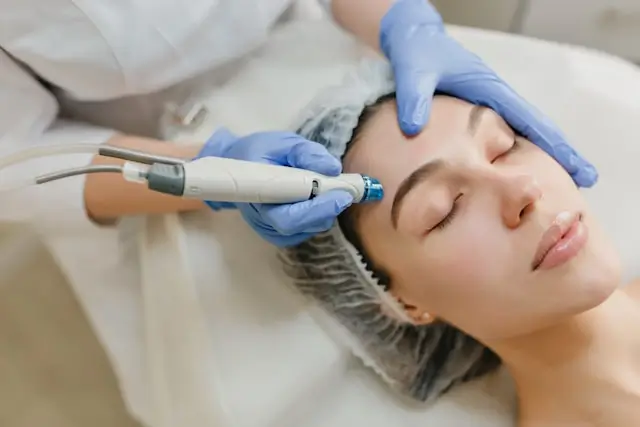
Professional treatments amplify the same biology. Microneedling creates controlled micro-injury that triggers collagen production. Lasers and radiofrequency devices heat the dermis to stimulate new collagen formation. When you’re supporting synthesis from within through supplementation, these external stimuli have more raw material amino acids and peptide signals already circulating to work with.
Related Posts
- Best Collagen for Skin: What Actually Works for Anti-Aging
- Best Sunscreen for Anti-Aging: Why Daily SPF Prevents Wrinkles Better Than Any Serum
- Skin Barrier Repair: Essential Tips for Healthy, Resilient Skin
- Anti-Aging Skin Care: Ingredients That Actually Work (Backed by Science)]
Frequently Asked Questions
How long does it take to see results from collagen supplementation?
Most people notice hydration improvements within 2–4 weeks. Visible changes in fine lines and elasticity typically become apparent after 8–12 weeks of consistent daily use, with continued improvement over several months for some outcomes.
Can collagen help with deep wrinkles?
It shows the most consistent results for fine lines and early wrinkles. Deep, long-established wrinkles may improve somewhat with sustained use, but generally respond better to combined approaches that include professional treatments alongside supplementation.
Why did collagen work for my friend but not for me?
Usually a difference in biological context rather than the supplement itself sun exposure, diet, sleep, baseline collagen status, and consistency of use all shape the outcome. Someone with more UV damage, a nutrient-poor diet, or inconsistent daily use is likely to see less from an identical product than someone whose fundamentals already support collagen synthesis.
What’s the difference between collagen and collagen peptides?
Collagen peptides are collagen that’s been hydrolysed broken into smaller fragments that absorb far more efficiently than whole collagen protein. Nearly all supplements marketed for skin benefits use the peptide (hydrolysed) form for this reason.
Should I take collagen with or without food?
Either works. Some people take it on an empty stomach hoping to maximise absorption; others mix it into coffee or a meal for convenience. Trial evidence doesn’t show timing to be a major factor; consistency of daily use matters far more than when you take it.
Are there side effects from collagen supplements?
Generally well tolerated. Some people notice mild digestive discomfort in the first few days, which usually resolves on its own. Allergic reactions are uncommon but possible, particularly with marine collagen in people with fish or shellfish allergies.
Collagen supplements are best viewed as one part of a broader strategy rather than a standalone anti-aging solution. Daily sun protection, adequate protein intake, vitamin C, sleep, and consistent supplementation all influence the final result.
When those fundamentals are in place, collagen peptides appear to offer modest but meaningful improvements in skin hydration and elasticity over time; the biology behind that process is well understood, even if the visible timeline requires more patience than most marketing suggests.
References:
- PubMed UV exposure, lifestyle factors, and collagen degradation: mechanisms review
- Journal of Cosmetic Dermatology Collagen peptide supplementation and skin hydration/elasticity: randomised controlled trial evidence
- Nutrients Prolyl-hydroxyproline and hydroxyprolyl-glycine as bioactive collagen peptides
- Skin Pharmacology and Physiology Oral collagen supplementation and post-cessation elasticity persistence