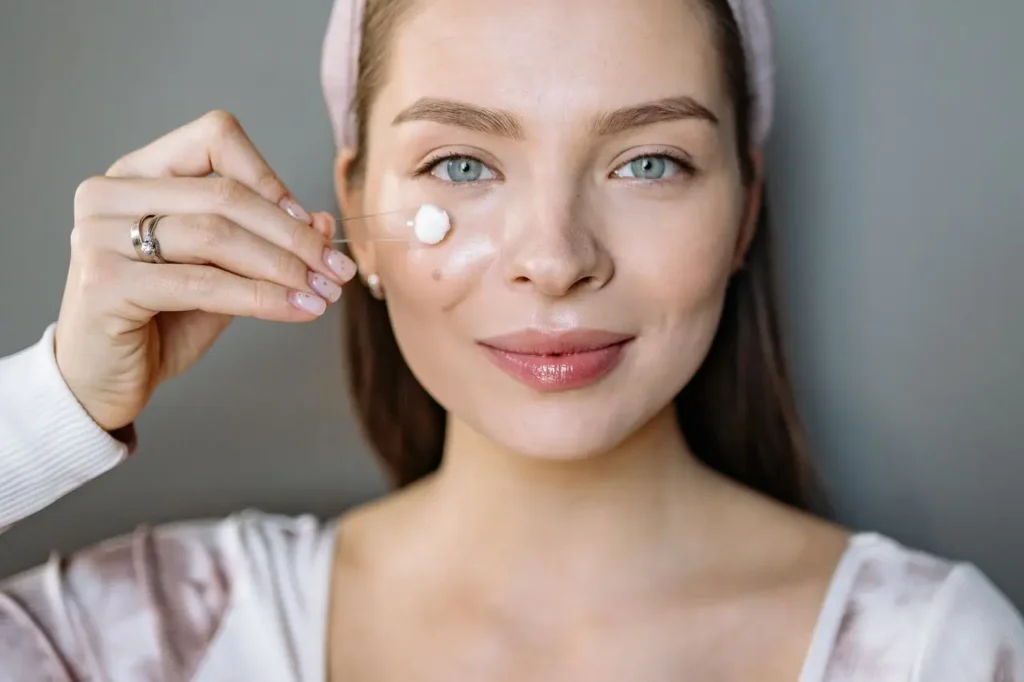
Foto by: Yan Krukau/Pexels
Key Takeaways
- Retinol has decades of clinical research behind it; bakuchiol’s evidence base is smaller and still developing.
- Bakuchiol was linked to fewer reported signs of irritation in the one available head-to-head trial.
- Neither ingredient’s safety during pregnancy or breastfeeding is settled; both require medical guidance.
- The real decision is evidence versus tolerability, not natural versus synthetic.
If you’re over 40 and weighing retinol vs bakuchiol, you’re likely dealing with two things at once: visible skin aging and skin that’s become more reactive than it used to be. Both ingredients target fine lines and firmness, but they work differently, and the research behind each is not equally strong.
This article compares what the evidence actually shows for each ingredient and helps you decide which one fits your skin. For the broader picture of skin aging and long-term strategy, see our complete anti-aging guide.
Quick Answer: Retinol or Bakuchiol After 40?
Choose retinol if you want the ingredient with the largest and longest-running body of clinical evidence, and your skin can tolerate a gradual introduction. Choose bakuchiol if retinoids have caused you persistent irritation, or your skin is highly reactive, and you’re willing to accept a smaller though still meaningful evidence base. Neither is automatically better. The right choice depends on what your skin can use consistently.
Why This Choice May Matter More After 40
Skin’s needs shift measurably with age. Collagen production declines by roughly 1% per year starting in the mid-20s, and that decline can accelerate around perimenopause as estrogen levels drop. Cell turnover slows, and the skin barrier becomes more prone to disruption which means products that were once well-tolerated can suddenly cause irritation.
This is why the retinol vs bakuchiol decision carries more weight after 40 than it might have at 25. At the same time, unaddressed collagen loss and slower turnover are exactly what show up as deeper lines and reduced firmness, so choosing an effective, tolerable active matters more, not less.
What Retinol Does for Aging Skin
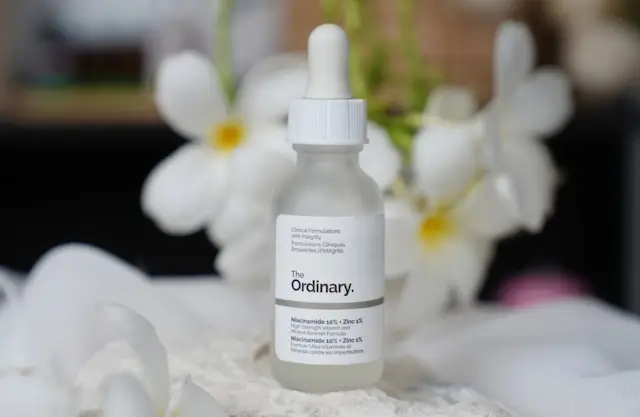
Photo by Abdul Raheem Kannath on Unsplash
Retinol is a vitamin A derivative that’s been used in dermatology since the 1970s. Inside the skin, it’s converted through a two-step process retinol to retinaldehyde, then to retinoic acid the biologically active form that interacts with retinoid receptors in skin cells.
This process contributes to increased epidermal turnover and supports dermal collagen production, although retinol is generally less potent and slower-acting than prescription retinoids such as tretinoin, since it depends on this conversion happening within the skin.
Strength of evidence: Strong. Retinoids are among the most extensively studied topical anti-aging ingredients, with decades of randomized controlled trials supporting effects on fine lines, collagen density, and photoaging.
What Bakuchiol Does for Aging Skin
Bakuchiol is a plant-derived compound extracted from the seeds and leaves of Psoralea corylifolia, used historically in Ayurvedic and Chinese medicine. It’s often marketed as a natural retinol alternative, but that framing oversimplifies the science.
Unlike retinoids, bakuchiol is not a vitamin A derivative and does not act by directly binding to retinoic acid receptors. Laboratory and clinical research suggests it may influence some of the same biological pathways involved in collagen production and photoaging, but its precise mechanism of action is still being investigated.
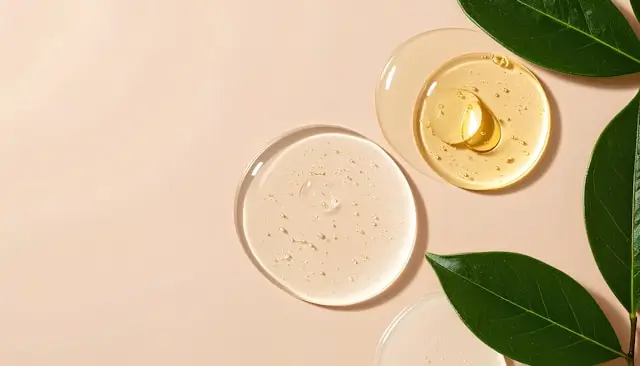
Bakuchiol
Photo by ibnu ihza on Unsplash
Strength of evidence: Moderate. Bakuchiol research is smaller in volume than the decades of retinoid literature, but the existing studies including one head-to-head comparison are reasonably well-designed.
The 2019 Head-to-Head Study: What It Did and Didn’t Prove
A widely cited 2019 study in the British Journal of Dermatology compared 0.5% bakuchiol against 0.5% retinol over 12 weeks. Both groups showed comparable improvement in fine lines and hyperpigmentation. In the available trial, bakuchiol was associated with fewer reported signs of irritation, including less scaling and stinging, than retinol.
What this study does not prove is that bakuchiol matches retinol across every anti-aging outcome, at every concentration, in every formulation. It’s one trial, with a specific concentration and duration. The overall evidence base for retinol remains far larger and more established.
Retinol vs Bakuchiol: Side-by-Side Comparison
| Factor | Retinol | Bakuchiol |
| Source | Vitamin A derivative (synthetic) | Plant-derived (Psoralea corylifolia) |
| Evidence base | Strong, decades of research | Moderate, growing research |
| Irritation potential | More commonly reported | Less reported in the available comparison |
| Sun exposure considerations | Can increase irritation; consistent SPF especially important | Sunscreen still essential for managing photoaging |
| Pregnancy | Generally avoided | Insufficient safety data |
| Breastfeeding | Discuss with healthcare provider | Insufficient safety data |
| Time to visible results | Typically 12–24 weeks | 8–12 weeks in available studies |
| Best for | Evidence-first approach | Tolerability-first approach |
Which Is Better for Fine Lines?
Photo by The Design Lady on Unsplash
Retinol has the stronger evidence base specifically for fine lines and photoaging, supported by decades of trials at various concentrations. Bakuchiol’s evidence for fine lines is promising, particularly from the 2019 comparative study, but it comes from a smaller number of trials. Both can measurably improve fine lines with consistent use; retinol’s advantage is the depth and consistency of research behind it, not necessarily a proven difference in real-world results.
Which Is Better for Sensitive or Reactive Skin?
If you have rosacea-prone or highly reactive skin, bakuchiol may be worth discussing as a potentially gentler option, but clinical evidence specifically in rosacea is limited. Retinol and other retinoids may also be tolerated by some people with well-controlled rosacea, but introduction should be cautious, gradual, and individualized ideally with input from a dermatologist if you have a diagnosed reactive skin condition.
The Evidence vs Tolerability Trade-Off
This is the real decision underneath retinol vs bakuchiol, and it’s more useful than natural vs synthetic.
Choose retinol if: You prioritize the ingredient with the largest and longest clinical evidence base for photoaging and fine lines, and your skin can tolerate a gradual introduction.
Consider bakuchiol if: Your main obstacle is retinoid irritation, and you’re willing to use an ingredient with a smaller though still meaningful body of supporting research.
Don’t choose based solely on natural vs synthetic. Natural does not automatically mean safer, and synthetic does not automatically mean harsher. The relevant factors are evidence strength and how your specific skin responds.
Who Should Consider Retinol?
- People with resilient skin that doesn’t react easily to new actives
- People who want the ingredient with the largest and longest clinical evidence base
- People who have used retinoids before without significant lasting irritation
- People who are not pregnant, breastfeeding, or planning pregnancy
Who Should Consider Bakuchiol?
- People with sensitive, reactive, or easily irritated skin
- People who’ve tried retinol and experienced persistent irritation despite gradual introduction
- People looking for a retinoid-free option though pregnancy and breastfeeding use should still be discussed with a healthcare provider, since safety data for bakuchiol are limited too
- People who want a gentler starting point before considering retinol later
Pregnancy, Breastfeeding, and Safety Considerations
Retinoids, including retinol, are generally avoided during pregnancy based on existing safety guidance. Bakuchiol does not have the same body of safety data either way the absence of evidence of harm is not the same as evidence of safety. If you are pregnant, breastfeeding, or planning pregnancy, discuss both options with your OB-GYN or dermatologist before using either ingredient. Don’t assume a plant-derived ingredient is automatically the safer default.
5 Mistakes That Make Either Ingredient Harder to Tolerate
- Starting retinol too frequently instead of building up gradually
- Layering multiple new actives at once, making it hard to identify what’s causing irritation
- Applying more product than needed a pea-sized amount is enough for the full face
- Switching products before giving one enough time to work, typically 8–12 weeks
- Treating irritation as proof a product is working irritation is not a measure of efficacy
Can You Use Retinol and Bakuchiol Together?
You don’t need both to get anti-aging benefits. For most people, choosing one active and using it consistently is simpler. Some people alternate retinol and bakuchiol to balance retinoid efficacy with a potentially gentler routine, although there is limited clinical evidence that combining both provides greater anti-aging benefit than using retinol alone consistently.
How to Introduce Your Choice Gradually
- Start with 2–3 applications per week, not nightly
- Apply to fully dry skin
- Use a pea-sized amount for the whole face
- Follow with a barrier-supportive moisturizer
- Increase frequency gradually over several weeks as tolerance builds
- Pair with daily SPF regardless of which ingredient you choose
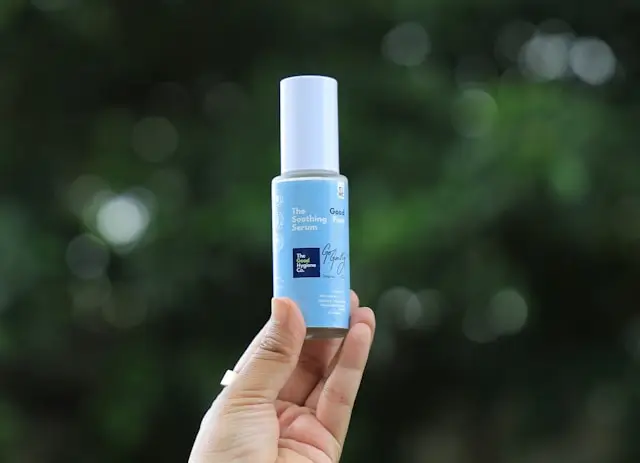
Photo by The Good Hygenie Co TGHC on Unsplash
Whichever ingredient you choose, keep the rest of your routine simple: a gentle cleanser, moisturizer, and broad-spectrum sunscreen during the day. Introduce only one new active at a time so you can identify irritation and adjust frequency if needed. For a full routine breakdown, see our skincare routine guide for women over 40.
What About Side Effects?
Retinol can cause an adjustment period that may include dryness, peeling, redness, or irritation as skin builds tolerance. Some people also experience temporary acne flares; not every reaction should be assumed to be purging, a term that’s often used loosely in skincare marketing to explain any irritation.
Bakuchiol side effects are less commonly reported, and generally milder when they occur. That doesn’t mean risk-free: patch testing before full-face use is still worthwhile for any new active ingredient.
People with significantly compromised skin barriers, active dermatitis, or recent skin procedures (chemical peels, laser treatments) should pause both ingredients until skin recovers, and check timing for reintroduction with a dermatologist.
When to See a Dermatologist
See a dermatologist if you’ve used either ingredient consistently for 12 weeks with no improvement, if irritation persists despite reducing frequency and using barrier-supportive moisturizer, or if you notice unusual reactions like persistent burning, swelling, or blistering. A professional can also rule out underlying conditions that neither ingredient will resolve on its own.
Frequently Asked Questions
Is bakuchiol as effective as retinol?
In the one available head-to-head trial, both showed comparable improvement in fine lines and hyperpigmentation. But the overall evidence base for retinol is much larger, so it isn’t accurate to say bakuchiol has been proven equally effective across all anti-aging outcomes; the comparison is currently limited to what that single study measured.
Is bakuchiol safe during pregnancy?
Safety data on bakuchiol during pregnancy is limited, so it shouldn’t be assumed safe by default. Retinoids, including retinol, are generally avoided during pregnancy. Always consult your OB-GYN or dermatologist before using either ingredient while pregnant or breastfeeding.
How long before I see results from retinol or bakuchiol?
Most studies show visible improvement starting around 8–12 weeks, with continued improvement up to 24 weeks. Results depend on consistency and individual skin factors. Switching products before that window has passed usually means judging an ingredient before it’s had a fair chance to work.
Can I use bakuchiol instead of retinol if I have rosacea?
Bakuchiol may be worth discussing as a potentially gentler option, but clinical evidence specifically in rosacea is limited for both ingredients. Individualized guidance from a dermatologist is the safest starting point if you have a diagnosed reactive skin condition.
Should I choose based on natural versus synthetic?
No. That framing doesn’t reflect how these ingredients actually perform. Retinol is synthetic and has the stronger evidence base; bakuchiol is plant-derived and has a smaller but real body of research. Base the decision on evidence strength and how your skin responds, not on ingredient origin.
The Bottom Line: Which Is Better After 40?
If your priority is the ingredient with the strongest clinical evidence for photoaging, fine lines, and collagen-related changes, retinol remains the better-supported choice. If your priority is finding a potentially gentler active because your skin is reactive or you’ve struggled with retinoid irritation, bakuchiol may be a reasonable alternative.
The evidence does not support saying bakuchiol is universally as effective as retinol across all anti-aging outcomes. The better choice is the one you can use consistently and tolerate over time that consistency matters more than which ingredient you pick.
How We Researched This Comparison
This comparison draws on peer-reviewed clinical research on topical retinoids and bakuchiol, including the published head-to-head study of 0.5% retinol and 0.5% bakuchiol. Where evidence is limited, particularly for bakuchiol, the article distinguishes established findings from emerging research.
This article is intended for general educational purposes and does not replace individualized dermatological advice. If you are pregnant, breastfeeding, or have a diagnosed skin condition, consult a qualified dermatologist before starting either ingredient.
References
- Dhaliwal S, Rybak I, Ellis SR, et al. Prospective, randomized, double-blind assessment of topical bakuchiol and retinol for facial photoageing. British Journal of Dermatology. 2019;180(2):289-296. PubMed
- Mukherjee S, Date A, Patravale V, et al. Retinoids in the treatment of skin aging: an overview of clinical efficacy and safety. Clinical Interventions in Aging. 2006;1(4):327-348. PubMed
- Chaudhuri RK, Bojanowski K. Bakuchiol: A retinol-like functional compound revealed by gene expression profiling and clinically proven to have anti-aging effects. International Journal of Cosmetic Science. 2014;36(3):221-230. PubMed
- American Academy of Dermatology Association. Retinoid or retinol: Which one is right for you? AAD.org.