Key Takeaways
- Specific nutrients particularly lutein, zeaxanthin, zinc, and vitamin A have genuine clinical evidence for supporting macular health and reducing the risk of progression in age-related macular degeneration (AMD).
- The AREDS2 formula, developed through large government-funded clinical trials, remains the gold standard nutritional reference for AMD risk reduction.
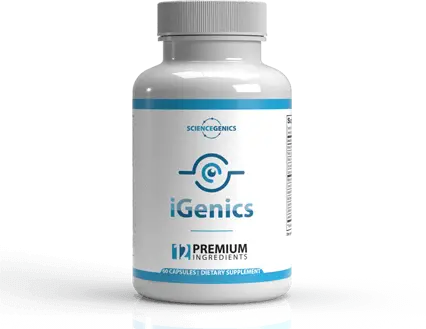
- iGenics combines several evidence-based ingredients with a few whose evidence is more preliminary making it a reasonable but not uniquely superior option in its category.
- No supplement currently available restores vision already lost to AMD, cataracts, or other eye diseases.
- Regular professional eye examinations remain the most important tool for protecting long-term vision; no supplement replaces them.
- Our Verdict on iGenics
- Can Eye health Supplements Really Help Your Eyes?
- What Research Doesn't Show
- The Nutrients That Actually Have Evidence
- How iGenics Compares With AREDS2 Formulas
- What Eye Specialists Generally Recommend
- Decision Framework: When to Consider Supplementation
- 7 Questions to Ask Before Buying
- Who Should Exercise Caution or Avoid Without Medical Guidance
- Is It Worth Buying?
- Related Posts
- Frequently Asked Questions
Our Verdict on iGenics
| Overall Rating | ⭐⭐⭐⭐☆ |
| Ingredient Quality | ⭐⭐⭐⭐⭐ |
| Evidence for Eye Health Maintenance | ⭐⭐⭐⭐☆ |
| Evidence for Vision Restoration | ⭐⭐☆☆☆ |
| Value for Money | ⭐⭐⭐☆☆ |
| Best for | Adults over 40 seeking nutritional support for eye health not those with diagnosed eye disease expecting reversal |
Can Eye health Supplements Really Help Your Eyes?
The short answer: for specific purposes, yes with important caveats about what help actually means.
The retina contains the highest concentration of mitochondria in the body, making it exceptionally vulnerable to oxidative stress. As we age, the natural antioxidant systems protecting retinal tissue become less efficient. Cumulative damage from UV radiation and oxidative byproducts of normal metabolism contributes to age-related changes, including macular degeneration.
Certain nutrients particularly the carotenoids lutein and zeaxanthin accumulate selectively in the macula, where they filter blue light and act as localised antioxidants. Their levels in the macula are partly determined by dietary intake. This is why nutritional support has a biologically sound rationale for eye health maintenance.
What nutritional support cannot do is regenerate photoreceptor cells or neural pathways already destroyed by disease. The evidence supports prevention and slowing of decline not restoration of vision already lost.
What Research Doesn’t Show
Many eye supplement products imply benefits that the current evidence base does not support. For clarity:
❌ No supplement has been shown to restore vision lost to AMD ❌ No supplement cures or treats glaucoma ❌ Supplements do not eliminate cataracts ❌ Nutritional support does not replace prescription treatment for diagnosed eye disease ❌ No supplement has been proven to prevent blindness ❌ Supplements do not eliminate the need for regular professional eye examinations
This is not a dismissal of nutritional eye health; the evidence for certain nutrients in preventing progression is real and meaningful. It is a correction of marketing language that systematically overstates what these products do.
The Nutrients That Actually Have Evidence
Lutein and Zeaxanthin
Evidence level: ⭐⭐⭐⭐⭐
These carotenoid pigments accumulate selectively in the macula and lens. The Age-Related Eye Disease Studies (AREDS and AREDS2) large, rigorous, government-funded clinical trials found that supplementation with lutein and zeaxanthin alongside other antioxidants reduced the risk of progression to advanced AMD by approximately 18–25% in people with intermediate AMD.
According to the National Eye Institute, lutein and zeaxanthin in AREDS2 formulations represent the most evidence-based nutritional intervention for AMD risk reduction currently available.
Effective research doses: 10mg lutein and 2mg zeaxanthin daily.
Can lutein improve eyesight? Lutein does not restore vision or correct refractive error. It accumulates in the macula and helps protect photoreceptor cells from oxidative damage and blue light. Its benefit is protective and preventive, most evident in people at elevated risk of AMD or with early-stage disease.
Zinc and Vitamin A
Evidence level: ⭐⭐⭐⭐☆
Zinc concentrates heavily in retinal tissue and was one of the original AREDS supplement ingredients, where it showed significant reduction in AMD progression risk alongside antioxidant vitamins. Vitamin A forms rhodopsin, the pigment essential for low-light and night vision. Both are well-established essential nutrients for retinal function, not speculative additions.
Saffron (Crocus sativus)
Evidence level: ⭐⭐⭐⭐☆ Genuinely promising
Saffron is among the most interesting ingredients in this category. Its active compounds crocin and safranal have been studied specifically for effects on retinal function. A randomised controlled trial published in Archives of Biochemistry and Biophysics found saffron supplementation improved light sensitivity in people with early AMD. A subsequent study found measurable improvements in electroretinogram (ERG) responses — an objective measure of retinal electrical activity. The evidence base is smaller than for lutein/zeaxanthin but consistent.
Bilberry Extract
Evidence level: ⭐⭐⭐☆☆
Bilberry anthocyanins support capillary integrity in the retina and may improve ocular blood flow. Some evidence supports improvements in night vision and dark adaptation. The mechanism is biologically plausible and the safety profile is excellent, though the research base is less rigorous than for the AREDS2 nutrients.
Ginkgo Biloba
Evidence level: ⭐⭐⭐☆☆
Ginkgo biloba has documented effects on peripheral circulation including ocular blood flow. Some studies suggest potential benefit for normal-tension glaucoma, though this should not be interpreted as support for using ginkgo as a treatment for glaucoma. Important: ginkgo has anticoagulant properties and interacts with blood-thinning medications including warfarin and aspirin.
How iGenics Compares With AREDS2 Formulas
The AREDS2 formula was developed specifically through large clinical trials and is what the National Eye Institute recommends for people with intermediate AMD. Understanding how this formula compares helps contextualise any product in this space.
| Ingredient | iGenics | AREDS2 Formula |
| Lutein (10mg) | ✓ | ✓ |
| Zeaxanthin (2mg) | ✓ | ✓ |
| Vitamin C (500mg) | Not confirmed | ✓ |
| Vitamin E (400 IU) | Not confirmed | ✓ |
| Zinc (80mg) | ✓ (dose unconfirmed) | ✓ |
| Copper (2mg) | Not confirmed | ✓ |
| Saffron | ✓ | Not included |
| Bilberry | ✓ | Not included |
| Ginkgo Biloba | ✓ | Not included |
| Clinical trials as a formula | No | Yes (AREDS/AREDS2) |
The key distinction: AREDS2 is a specific, clinically-tested formula. The individual supplement being reviewed here has not been independently tested as a complete formula in clinical trials; the evidence for its ingredients comes from separate studies on each component. This is standard for most dietary supplements but worth understanding when comparing options.
For people already diagnosed with intermediate AMD, discussing AREDS2 supplementation with an ophthalmologist is the appropriate first step. For adults seeking general preventive nutritional support for eye health, the formula being reviewed here offers a reasonable combination with the addition of saffron, an ingredient with growing evidence that AREDS2 does not include.
What Eye Specialists Generally Recommend
Most ophthalmologists and optometrists focus on these evidence-based practices for long-term eye health:
- Annual or biennial professional eye examinations the most important tool for early detection
- UV-protective sunglasses with wraparound coverage
- Smoking cessation smoking significantly increases AMD risk
- Control of blood pressure, cholesterol, and blood sugar all affect ocular circulation
- A diet rich in leafy greens, coloured vegetables, and omega-3 fatty acids
- AREDS2 supplementation for people diagnosed with intermediate AMD, by ophthalmologist recommendation
Nutritional supplements support but do not replace these fundamentals.
Decision Framework: When to Consider Supplementation
Over 40 with concerns about eye health?
↓
Experiencing eye strain, fatigue, or difficulty in low light?
↓ YES ↓ NO
Improve diet first: Consider preventive
leafy greens, eggs, nutritional support
fatty fish if diet is poor
↓
Symptoms persist?
↓ YES
See an eye care professional
↓
Diagnosed with early or intermediate AMD?
YES → Ask about AREDS2 formula
NO → General nutritional support appropriate
↓
Considering a supplement formula?
↓
Check ingredient doses match research levels
(10mg lutein, 2mg zeaxanthin minimum)
↓
No medications that interact with ginkgo?
YES → Reasonable to consider
NO → Discuss with doctor first
7 Questions to Ask Before Buying
Has this supplement been clinically tested as a formula?
Unlike most dietary supplements, the evidence for the formula comes from research on its individual ingredients, not a clinical trial of the specific product. The AREDS2 formula is the exception in this category; it was tested as a specific combination in large trials.
Is it FDA approved?
No dietary supplement is FDA-approved in the same way prescription medications are. The FDA regulates dietary supplements as a category but does not pre-approve individual products before market. FDA-approved facility (GMP-compliant manufacturing) is different from FDA-approved product.
Is it manufactured in a GMP facility?
The manufacturer states GMP-compliant manufacturing. Look for this information on the product label or manufacturer website, as independent third-party testing verification (NSF, USP, or Informed Sport) would provide stronger assurance.
Are there reported side effects?
The ingredients at standard doses are generally well-tolerated. The most notable safety concern is the ginkgo biloba content; it can interact with blood thinners and anticoagulant medications. Some people experience mild digestive discomfort with zinc or turmeric.
Does it replace AREDS2?
No and for people diagnosed with intermediate AMD, it should not be used as a substitute for AREDS2 without discussing this with an ophthalmologist. AREDS2 is specifically recommended for that population based on direct clinical evidence.
Can it reverse cataracts or treat glaucoma?
No. Cataracts involve protein changes in the lens that are not reversed by nutritional supplementation — surgical removal is the treatment. Glaucoma requires medical management of intraocular pressure. No supplement in this category has evidence for treating or reversing either condition.
Is the price justified?
The formula includes a reasonable combination of evidence-based ingredients. Whether it justifies its price point versus buying lutein/zeaxanthin and zinc separately is a personal value decision. People who want the convenience of an all-in-one formula, particularly with saffron included at a clinically relevant dose, may find it worthwhile.
Who Should Exercise Caution or Avoid Without Medical Guidance
- Anyone taking anticoagulants or blood-thinning medications (ginkgo biloba interaction)
- People with hypervitaminosis A history (excess vitamin A)
- Those already taking high-dose zinc supplements
- Pregnant or breastfeeding women
- People with diagnosed eye conditions under active treatment discuss with your ophthalmologist
- Anyone experiencing sudden vision changes these require immediate professional evaluation
Is It Worth Buying?
Consider it if: ✔ You are over 40 and seek nutritional support for eye health maintenance ✔ You have a family history of AMD or significant UV exposure ✔ Your diet is low in lutein and zeaxanthin-rich foods (leafy greens, eggs) ✔ You want an all-in-one formula including saffron at a relevant dose ✔ You understand the evidence supports maintenance not restoration
Skip or reconsider if: ✘ You expect it to reverse existing vision loss ✘ You take blood-thinning medications (ginkgo interaction) ✘ You are using it as a substitute for professional eye examinations ✘ You have been recommended AREDS2 by your ophthalmologist discuss before switching
Related Posts
- Anti-Aging Guide: Science-Backed Skincare, Treatments & Daily Habits
- Anti-Aging Peptides: Benefits, Safety & What Science Really Says
Frequently Asked Questions
Can supplements like this restore vision lost to AMD?
No. Current evidence does not support restoration of vision already lost to AMD or other eye diseases. The clinical evidence for lutein, zeaxanthin, and zinc, the best-evidenced ingredients in formulas like this supports slowing progression of early AMD and reducing risk of progression to advanced stages. That is meaningful, but different from restoration.
What is the best nutrient for eye health?
Lutein and zeaxanthin have the strongest direct evidence for macular health specifically. Zinc and vitamin A are essential for retinal function. For overall eye protection, vitamin C and E (as antioxidants) and omega-3 fatty acids (for retinal structure) also have well-documented roles. No single nutrient covers all aspects of eye health.
Does lutein improve eyesight?
Lutein does not correct refractive error or restore lost vision. It accumulates in the macula and acts as a protective antioxidant and blue light filter. Studies show consistent use is associated with better macular pigment density and reduced progression risk in people with early AMD, a protective rather than restorative effect.
Can eye supplements prevent macular degeneration?
They may reduce the risk of progression in people already showing early signs of AMD, according to AREDS2 trial data. Whether they prevent AMD from developing in people with no current signs is less well-established. A diet rich in lutein and zeaxanthin from whole foods (leafy greens, eggs) is associated with lower AMD risk in large population studies.
Is blue light from screens actually dangerous to eyes?
The evidence for screen blue light specifically causing permanent eye damage is less robust than marketing around blue-light-blocking products implies. The more clearly documented effect of screens is digital eye strain from extended focus which is primarily a muscle fatigue issue, not photoreceptor damage. Outdoor UV exposure poses a considerably more established risk for cumulative retinal damage than indoor screen use.
How long before I notice any benefit from eye supplements?
Lutein and zeaxanthin accumulate in the macula over months. Clinical studies typically measure macular pigment optical density changes at 3–6 months. Some users report reductions in eye fatigue or improvements in contrast sensitivity earlier. Effects on AMD progression risk are long-term measured in years of consistent use, not weeks.
Nutritional support for eye health works best as part of a broader commitment: regular professional examinations, UV protection, a diet rich in coloured vegetables, and management of cardiovascular and metabolic risk factors that affect ocular circulation.
Medical Disclaimer: This article is for informational purposes only and does not constitute medical, ophthalmological, or clinical advice. Eye conditions including macular degeneration, glaucoma, diabetic retinopathy, and significant vision loss require diagnosis and treatment by a qualified eye care professional.
References:
- National Eye Institute AREDS and AREDS2 clinical trials: lutein, zeaxanthin, and AMD progression
- Archives of Biochemistry and Biophysics Saffron and retinal function in early AMD, 2015
- PubMed Bilberry anthocyanins and ocular blood flow: systematic review
- American Optometric Association Nutrition and eye health guidelines