Anti-aging supplements have become increasingly popular as more people seek effective ways to maintain youthful vitality and appearance without resorting to invasive procedures. If you’re looking to turn back the clock, understanding which supplements actually deliver results can save you money and disappointment. The market is flooded with products making bold promises, but only a select few have the scientific backing to support their anti-aging claims.
The truth is, aging happens at the cellular level long before you see wrinkles or feel decreased energy. Free radical damage, inflammation, declining hormone production, and reduced cellular repair all contribute to the visible and invisible signs of aging. This is where the top 3 anti-aging supplements to look younger buy can make a measurable difference—when chosen correctly and used consistently.
Before we explore specific supplements, it’s worth noting that no pill can replace healthy lifestyle habits. However, targeted supplementation can enhance your body’s natural repair mechanisms, protect against oxidative stress, and support the processes that keep you looking and feeling younger. The supplements we’ll discuss work through different pathways, making them complementary rather than redundant.
Understanding How Anti-Aging Supplements Work
Anti-aging supplements don’t actually reverse time they support your body’s natural processes that decline with age. Understanding these mechanisms helps you make informed choices about which supplements might benefit you most.
Cellular Protection and Repair
Your cells face constant attack from free radicals—unstable molecules that damage DNA, proteins, and cell membranes. This oxidative stress accelerates aging throughout your body. Antioxidant supplements neutralize free radicals, reducing this damage. However, not all antioxidants are created equal—some reach specific tissues more effectively than others.
Cellular repair mechanisms also slow with age. Your body becomes less efficient at fixing damaged DNA, replacing worn-out cellular components, and clearing out dysfunctional cells. Certain supplements can enhance these repair processes, helping your cells maintain function longer.
Inflammation Control
Chronic low-grade inflammation—sometimes called inflammaging—drives many age-related changes. Unlike acute inflammation that heals injuries, chronic inflammation damages tissues over time. It contributes to wrinkles, cognitive decline, cardiovascular disease, and metabolic dysfunction.
Anti-aging supplements with anti-inflammatory properties help control this destructive process. They work through various pathways to reduce inflammatory signaling molecules, protecting tissues from ongoing damage.
Collagen and Structural Support
Your skin, joints, blood vessels, and connective tissues rely on structural proteins like collagen and elastin. Production of these proteins declines significantly after age 25, leading to visible aging signs. Wrinkles form, skin loses firmness, and joints become less resilient.
Supplements that support collagen production or provide collagen directly can help maintain these structures. For a deeper understanding of how collagen works for skin health, exploring the best collagen supplements for anti-aging provides valuable insights into choosing the right type and dosage.
Hormone and NAD+ Support
Many anti-aging processes depend on adequate hormone levels and cellular energy production. NAD+ (nicotinamide adenine dinucleotide) is a coenzyme essential for energy metabolism and DNA repair. Levels decline dramatically with age, contributing to cellular dysfunction.
Supplements that boost NAD+ or support hormone balance can have wide-ranging anti-aging effects. These work at a fundamental level, improving how your cells generate energy and respond to stress.
The Top 3 Anti-Aging Supplements That Actually Work
After reviewing the research, three supplements stand out for their proven anti-aging benefits. These aren’t the newest trendy options they’re backed by substantial scientific evidence and real-world results.
Collagen Peptides for Skin and Joint Health
Collagen peptides rank as one of the most effective anti-aging supplements available today. Unlike whole collagen molecules that are too large to absorb, hydrolyzed collagen peptides are broken down into smaller fragments your body can utilize.
Oral collagen supplementation improves skin elasticity, hydration, and dermal collagen density. Studies show that taking 2.5-10 grams daily for 8-12 weeks produces measurable improvements in skin appearance.
The benefits extend beyond skin. Collagen peptides support joint health, reducing pain and improving mobility in people with osteoarthritis. They also strengthen hair and nails, which many users notice within weeks of starting supplementation.
Collagen works by providing the amino acids—particularly glycine, proline, and hydroxyproline—that your body needs to synthesize new collagen. When you consume collagen peptides, they’re absorbed and distributed to tissues throughout your body, where they stimulate collagen-producing cells called fibroblasts.
Types of collagen matter. Type I and III collagen are most abundant in skin and provide the best anti-aging benefits for appearance. Marine collagen (from fish) is primarily type I and absorbs well, while bovine collagen contains both types I and III. Choose a product from a reputable manufacturer that tests for purity and heavy metals.
NAD+ Boosters for Cellular Energy
NAD+ boosters represent one of the most scientifically promising anti-aging supplements. NAD+ is essential for cellular energy production, DNA repair, and activation of sirtuins—proteins that regulate aging processes. Unfortunately, NAD+ levels decline by approximately 50% between ages 40 and 60.
The anti-aging benefits of NAD+ boosters are wide-ranging. They enhance mitochondrial function, improving energy production at the cellular level. This translates to increased physical energy and reduced fatigue—one of the first things people notice when supplementing.
NAD+ boosters also activate sirtuins, particularly SIRT1, which influences numerous aging pathways. Sirtuins improve DNA repair, reduce inflammation, enhance insulin sensitivity, and may even extend lifespan based on animal research. While human longevity studies are ongoing, the metabolic improvements are well-documented.
Brain health benefits are particularly noteworthy. NAD+ supports neuronal function and may protect against age-related cognitive decline. Some users report improved mental clarity and focus within weeks of starting supplementation.
Typical dosing for nicotinamide riboside is 250-500mg daily, while NMN is often taken at 250-1000mg daily. These supplements are relatively expensive compared to basic vitamins, but many users find the energy and vitality improvements worth the investment. Take them in the morning, as they may interfere with sleep if taken late in the day.
Quality matters significantly with NAD+ boosters. Choose products that have been tested for purity and stored properly—these compounds can degrade if exposed to heat and moisture. Reputable brands provide third-party testing certificates.
Omega-3 Fatty Acids for Inflammation and Cellular Health
Omega-3 fatty acids, particularly EPA and DHA from fish oil, deserve recognition as essential anti-aging supplements despite being less trendy than newer options. These fats provide numerous benefits that directly counteract aging processes.
The anti-inflammatory effects of omega-3s are well-established. EPA and DHA reduce production of inflammatory molecules called cytokines and eicosanoids. This helps control the chronic inflammation that accelerates aging throughout your body. Regular omega-3 supplementation measurably reduces inflammatory markers in blood tests.
Skin benefits include improved hydration, reduced sensitivity, and protection against sun damage. Omega-3s support the skin’s lipid barrier, which becomes compromised with age. They also help regulate oil production and may reduce acne in some people.
Cardiovascular protection is one of omega-3s’ strongest benefits. They reduce triglycerides, lower blood pressure slightly, decrease blood clotting tendency, and stabilize heart rhythm. Given that cardiovascular disease remains a leading cause of death and disability, these protective effects are significant for healthy aging.
Brain health depends heavily on adequate omega-3 intake. DHA comprises a large percentage of brain cell membranes and supports cognitive function. Regular supplementation may reduce risk of age-related cognitive decline and depression. Some research suggests omega-3s help maintain brain volume as we age.
Joint health improves with omega-3 supplementation, particularly for people with arthritis. The anti-inflammatory effects reduce joint pain and stiffness, improving mobility and quality of life.
Dosing matters for optimal results. Most research uses 1000-3000mg combined EPA and DHA daily, with higher doses showing greater benefits for some conditions. Look for supplements that provide at least 500mg EPA and 250mg DHA per serving. Concentrated fish oil or krill oil products make it easier to get therapeutic doses without taking multiple large capsules.
Quality is crucial with fish oil supplements. Choose products that have been tested for mercury, PCBs, and other contaminants. Molecular distillation removes these toxins. Also verify that the oil is fresh—rancid fish oil can do more harm than good. Smell your capsules before taking them; they shouldn’t have a strong fishy odor.
Consider taking omega-3s with meals containing some fat to improve absorption. Some people prefer taking them in the evening to minimize any fishy aftertaste, though this varies by individual and product quality.
For those interested in comprehensive anti-aging strategies that complement supplementation, exploring the complete anti-aging guide provides a holistic approach to maintaining youthfulness.
Additional Anti-Aging Supplements Worth Considering
While the top three anti-aging supplements provide the most robust benefits, several others deserve mention for specific concerns or as complementary additions to your regimen.
Resveratrol for Longevity Pathways
Resveratrol is a polyphenol found in grape skins, red wine, and certain berries. It gained attention for activating sirtuins and mimicking some benefits of caloric restriction in animal studies. While human research is less definitive, resveratrol shows promise for cardiovascular health and may improve insulin sensitivity.
Typical dosing ranges from 150-500mg daily of trans-resveratrol (the active form). Bioavailability is limited, so some formulations include piperine or quercetin to enhance absorption. Results are subtle rather than dramatic, and resveratrol works best as part of a comprehensive anti-aging approach rather than a standalone supplement.
Vitamin C for Collagen Synthesis
Vitamin C is essential for collagen production—your body can’t synthesize collagen without it. While severe deficiency is rare in developed countries, many people don’t consume optimal amounts for anti-aging purposes.
Supplementing with 500-1000mg daily supports collagen synthesis, provides antioxidant protection, and enhances immune function. Vitamin C also helps regenerate other antioxidants like vitamin E. For maximum absorption, split your dose throughout the day or choose a time-release formulation.
The synergy between vitamin C and collagen peptides makes them natural partners. Taking them together may enhance results beyond either supplement alone.
Coenzyme Q10 for Mitochondrial Support
CoQ10 is essential for mitochondrial energy production and acts as an antioxidant. Levels decline with age, and statin medications further deplete CoQ10. Supplementation improves energy production, supports cardiovascular health, and may reduce oxidative stress.
Typical dosing is 100-300mg daily of ubiquinone or 100-200mg of ubiquinol (the reduced, more bioavailable form). CoQ10 is fat-soluble, so take it with meals containing fat for best absorption. Benefits include improved energy, cardiovascular support, and potential skin benefits through reduced oxidative damage.
Hyaluronic Acid for Skin Hydration
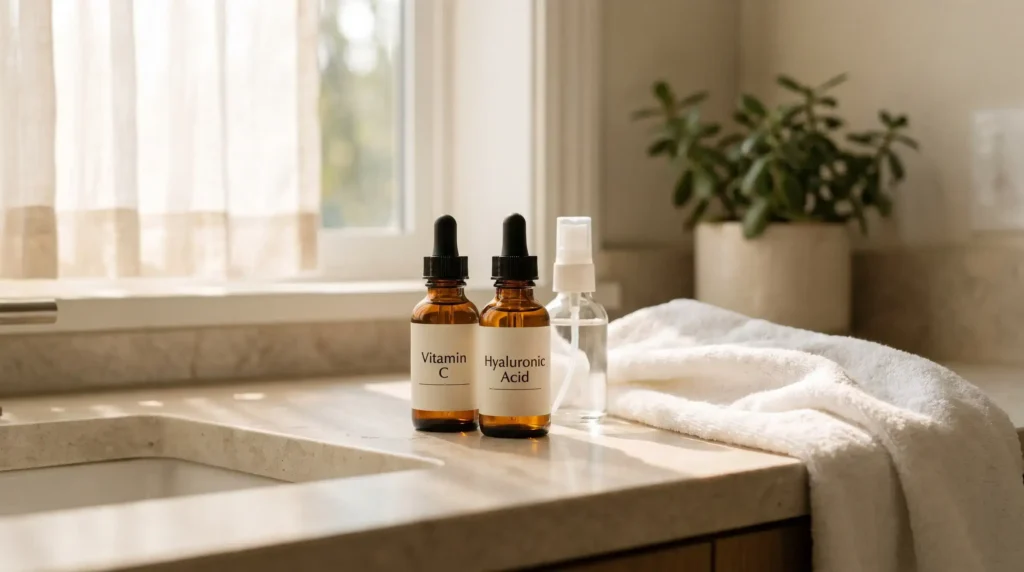
Hyaluronic acid holds up to 1000 times its weight in water, making it crucial for skin hydration and plumpness. Oral supplementation increases skin moisture and may reduce wrinkle depth. Typical dosing is 120-240mg daily, with results visible after 4-12 weeks of consistent use.
This supplement works well alongside collagen, as both support skin structure and hydration through complementary mechanisms. Many people notice improved skin texture and reduced dryness within a month of starting supplementation.
Vitamin D for Overall Health
While not specifically marketed as an anti-aging supplement, vitamin D influences numerous processes that affect how you age. Deficiency is extremely common, particularly in northern climates or for people who avoid sun exposure.
Adequate vitamin D supports immune function, bone health, mood, cardiovascular health, and may reduce cancer risk. Testing your levels and supplementing to achieve 40-60 ng/mL provides optimal benefits. Most people need 2000-5000 IU daily, though individual requirements vary.
Understanding which vitamins are most important for skin health and anti-aging helps you prioritize supplementation based on your specific concerns.
How to Choose Quality Anti-Aging Supplements
Not all anti-aging supplements are created equal. Manufacturing quality, ingredient purity, and proper formulation significantly impact both safety and effectiveness.
Third-Party Testing and Certifications
Look for products that have been tested by independent laboratories. Third-party certifications from organizations like NSF International, USP, or ConsumerLab verify that products contain what their labels claim and are free from contaminants.
These certifications test for heavy metals, microbial contamination, pesticides, and adulterants. They also verify that the amount of active ingredient matches the label claim. This is particularly important for supplements like omega-3s, NAD+ boosters, and collagen where quality varies dramatically.
Bioavailability and Formulation
The form of a supplement affects how well your body absorbs and utilizes it. For example, collagen peptides are far more bioavailable than whole collagen. Ubiquinol is more readily absorbed than ubiquinone for CoQ10. Omega-3s in triglyceride or phospholipid form absorb better than ethyl ester forms.
Some supplements include ingredients specifically to enhance absorption. Black pepper extract (piperine) increases bioavailability of many compounds. Fat-soluble vitamins and supplements absorb better when taken with meals containing fat.
Dosing and Concentration
Pay attention to serving sizes and actual amounts of active ingredients. Some products require taking multiple capsules to achieve effective doses, which increases cost and inconvenience. Compare the amount of active ingredient per serving rather than just price per bottle.
For multi-ingredient formulas, verify that each component is present at effective doses. Many anti-aging blends contain impressive-sounding ingredients but in amounts too small to produce benefits. Single-ingredient supplements at proper doses often work better than underdosed combinations.
Storage and Expiration
Many anti-aging supplements degrade when exposed to heat, light, or moisture. Choose products in opaque containers that protect contents from light. Check expiration dates and buy from retailers with good turnover to ensure freshness.
Store supplements properly at home—typically in a cool, dry place away from heat and humidity. Refrigeration benefits some products like probiotics and certain oils. Follow storage instructions on labels for maximum potency.
Brand Reputation
Research brands before purchasing. Reputable companies invest in quality control, test their products, and stand behind their formulations. Read reviews, but be skeptical of perfect five-star ratings—they may indicate filtered or fake reviews.
Avoid products making unrealistic promises or that combine anti-aging claims with weight loss, muscle building, or other unrelated benefits in a single formula. Legitimate anti-aging supplements focus on specific, research-backed mechanisms rather than promising everything.
Creating an Effective Anti-Aging Supplement Routine
Taking anti-aging supplements randomly won’t produce optimal results. A strategic approach based on your specific needs and goals works better than simply swallowing every supplement that promises youth.
Assessing Your Individual Needs
Start by identifying your primary concerns. Are you most interested in skin appearance, energy levels, joint health, or cognitive function? Different supplements provide different benefits, so prioritize based on what matters most to you.
Consider having relevant blood tests done. Vitamin D, omega-3 index, inflammatory markers, and hormone levels provide baseline data that helps you choose supplements and track progress. Testing before and after several months of supplementation demonstrates whether your approach is working.
Your age, diet, lifestyle, and health conditions all influence which supplements will benefit you most. Someone eating fish three times weekly may not need omega-3 supplements, while someone with a plant-based diet likely does. Similarly, outdoor workers in sunny climates probably get adequate vitamin D, while office workers in northern regions don’t.
Building Your Stack
Start with one or two of the top 3 anti-aging supplements to look younger buy rather than beginning everything simultaneously. This allows you to assess how you respond and identify any side effects. Once you’ve established tolerance, you can add complementary supplements.
A basic anti-aging stack might include:
- Morning: Collagen peptides (5-10g), omega-3s (2000mg EPA/DHA), vitamin D (2000-4000 IU)
- Midday: NAD+ booster (NR or NMN)
- Evening: Additional omega-3s if taking high doses
This combination addresses skin health, inflammation, cellular energy, and overall health through complementary mechanisms. You can then add targeted supplements for specific concerns.
Timing and Combining Supplements
Some supplements work better when taken at specific times or with certain foods. Fat-soluble supplements (omega-3s, CoQ10, vitamins D, E, and K) absorb best with meals containing fat. Water-soluble vitamins can be taken anytime but are often better tolerated with food.
NAD+ boosters may provide an energy boost, so taking them in the morning or early afternoon prevents potential sleep disruption. Collagen can be taken anytime, though some people prefer adding it to morning coffee or smoothies.
Certain nutrients enhance each other’s effects. Vitamin C supports collagen synthesis, making them natural partners. Vitamin D improves calcium absorption. Omega-3s and vitamin E work synergistically as antioxidants.
Conversely, some combinations should be avoided. High-dose calcium can interfere with iron absorption. Zinc and copper compete for absorption. If taking multiple minerals, separate them by several hours or choose a well-formulated multi-mineral that accounts for these interactions.
Consistency and Patience
Anti-aging supplements require consistent use over weeks to months before producing noticeable results. Collagen takes 4-8 weeks to show skin improvements. NAD+ boosters may increase energy within days but take longer for cellular health benefits to accumulate. Omega-3s need 4-12 weeks to significantly impact inflammation markers.
Set realistic expectations. These supplements support your body’s natural processes—they don’t produce overnight transformations. The benefits are real but gradual, and they’re most apparent when combined with healthy lifestyle habits.
Track your progress through photos, journaling how you feel, or tracking specific metrics like skin moisture measurements or joint pain levels. Subtle improvements are easy to miss without documentation, especially when changes occur slowly over months.
When to Adjust Your Approach
Reassess your supplement routine every 3-6 months. What worked initially may need adjustment as your needs change or as you achieve certain goals. Blood work can guide these adjustments by showing whether deficiencies have been corrected or if new ones have emerged.
If you’re not seeing results after 3 months of consistent supplementation at proper doses, something needs to change. The supplement quality may be poor, your dosage might be insufficient, or that particular supplement may not address your specific needs. Consider working with a healthcare practitioner who understands integrative anti-aging approaches.
Budget is a practical consideration. Anti-aging supplements, particularly NAD+ boosters, can be expensive. Prioritize the supplements providing the most benefit for your individual situation rather than trying to take everything. Collagen and omega-3s offer excellent value for their broad-spectrum anti-aging benefits and reasonable cost.
Implementing morning habits that prevent wrinkles alongside your supplement routine creates a comprehensive approach to maintaining youthful appearance.
Related Posts:
- Morning Habits That Prevent Wrinkles
- Anti-Aging Vitamins for Skin: What Works
- Best Collagen for Skin Anti-Aging
The path to maintaining youthful vitality doesn’t require accepting every sign of aging as inevitable. Strategic supplementation with proven anti-aging supplements provides your body with tools to maintain cellular health, protect against damage, and support the structures and systems that keep you looking and feeling younger.
Collagen peptides, NAD+ boosters, and omega-3 fatty acids form a powerful foundation for any anti-aging regimen. These three supplements address aging through different but complementary mechanisms—structural support, cellular energy, and inflammation control. When combined with quality sleep, stress management, exercise, and proper nutrition, they create a comprehensive approach to healthy aging.