Key Takeaways
- After 50, skin often becomes thinner, drier, and more reactive due to a combination of aging, cumulative sun exposure, and, for many women, hormonal changes so routines built for younger or oilier skin often cause irritation rather than results.
- Some widely marketed claims (like retinol being the only path to results, or specific miracle ingredients) oversimplify the evidence. Well-tolerated ingredients like niacinamide, peptides, and bakuchiol have real supporting research, though most trials are small and short.
- Daily broad-spectrum sunscreen is one of the best-supported ways to reduce visible skin aging, and skin cancer risk itself rises with age making sun protection a health issue, not just a cosmetic one.
An anti-aging skincare routine after 50 does need a different approach than what worked in your 30s or 40s skin genuinely changes with age and, for many women, with menopause.
But a lot of what circulates online about the one ingredient that fixes everything or products marketed as dermatologist-approved without any actual dermatologist behind them overstates what skincare alone can do.
Why Skin Changes After 50
Skin changes after 50 for several overlapping reasons: chronological aging, cumulative sun exposure, genetics, lifestyle factors like smoking and sleep, and for many women the hormonal shifts of menopause. No single factor explains every change, and the mix looks different from person to person.
Declining estrogen is one meaningful piece of the picture. Estrogen supports collagen production and skin thickness, and research has found that women can lose a substantial share of dermal collagen in the years following menopause, with a slower decline continuing afterward [3].
But sun damage accumulated over decades, and genetic differences in how skin ages, matter just as much for many people which is part of why two women the same age can have noticeably different skin.
Two practical consequences of these combined changes are worth knowing:
- The skin barrier (the outer layer that holds in moisture and blocks irritants) tends to repair itself more slowly with age, according to dermatology research on aging skin. That means more dryness and more reactivity to products that were once well tolerated.
- Surface cell turnover slows with age, which can leave skin looking duller or rougher. This is commonly discussed as a gradual shift over decades rather than a fixed number of days, and it’s part of why gentle, paced exfoliation not aggressive scrubbing tends to work better for mature skin.
Understanding that multiple factors are at play matters practically: no skincare product reverses menopause, chronological aging, or genetics. What a good routine can realistically do is support the skin’s barrier, reduce further damage, and improve texture and tone over time.
Morning Routine
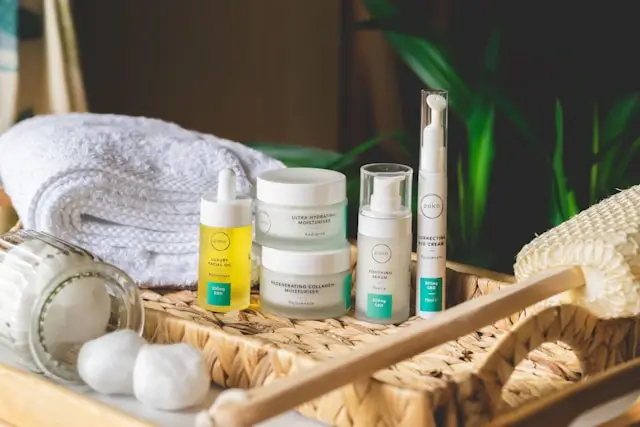
Image by Poko Skincare on Unsplash
Gentle Cleansing
A gentle, non-stripping cleanser is often a good choice for mature skin. Cream, oil, and low-foaming formulas can all work, depending on your skin type and tolerance. If skin feels tight after cleansing, that’s a sign the cleanser is too harsh for your skin.
Some people find that cleansing thoroughly only in the evening, and simply rinsing with water in the morning, works well. This is a matter of individual tolerance rather than a universal rule.
Hydrating Toner or Essence (Optional)
An alcohol-free hydrating toner or essence, applied to damp skin, can help subsequent products absorb and add a layer of humectants like glycerin or hyaluronic acid. This step is optional; its benefit is mainly about layering hydration, not a distinct anti-aging mechanism.
Antioxidant Serum
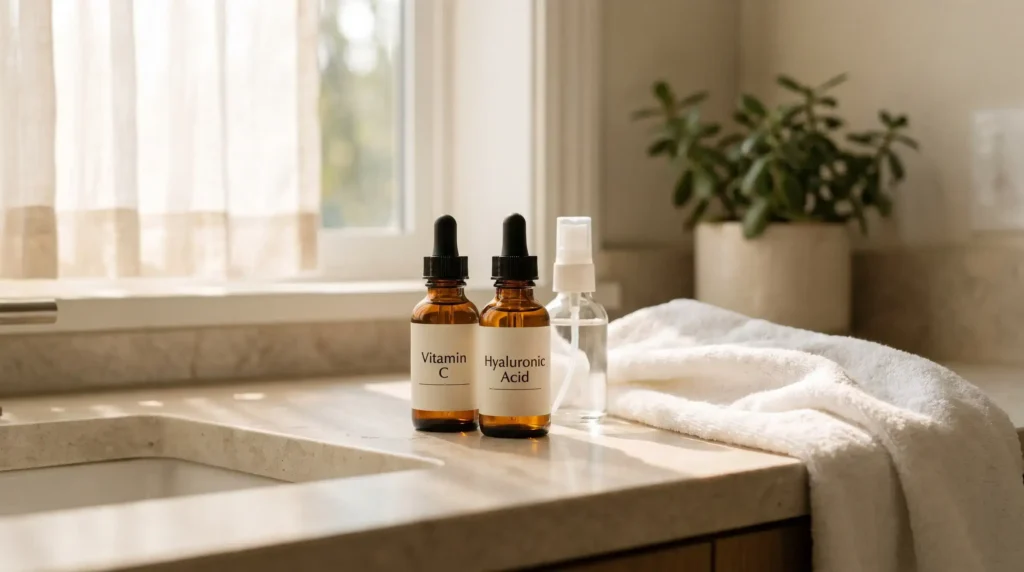
Topical vitamin C has research support for antioxidant protection against UV- and pollution-related damage, and some evidence for supporting collagen synthesis.
Pure L-ascorbic acid can be irritating on sensitive, mature skin; gentler derivatives (like magnesium ascorbyl phosphate or sodium ascorbyl phosphate) or formulations that combine vitamin C with vitamin E and ferulic acid are often better tolerated, though they aren’t necessarily equally potent.
Moisturizer
Moisturizer is a core step for mature skin, since it directly addresses the increased dryness common after 50. Ingredients with reasonable evidence for barrier support and hydration include:
- Ceramides lipids that make up part of the skin’s barrier “mortar”; topical ceramides support barrier repair.
- Niacinamide supported by randomized trials for improving fine lines, hyperpigmentation, redness, and barrier function over several weeks of use, and generally very well tolerated [4].
- Hyaluronic acid a humectant that draws water into the skin; it’s a well-established hydrating ingredient, though marketing claims about exactly how much water it holds are based on lab conditions and don’t translate directly into how hydrated skin will feel.
- Peptides signal molecules that may support collagen production; evidence is generally positive but comes from smaller, shorter studies than the retinoid literature.
- Squalane a lightweight emollient that helps reduce water loss.
Richer textures are often better tolerated by mature skin than a lightweight lotion would have been at 30, simply because oil production is lower.
Sunscreen
Daily broad-spectrum sunscreen (SPF 30 or higher) is one of the best-supported ways to reduce cumulative UV damage and help prevent premature skin aging, and it matters beyond appearance: skin cancer risk increases with age and cumulative sun exposure [1].
People with sensitive or reactive skin may prefer mineral formulations (zinc oxide or titanium dioxide), which can be better tolerated by some individuals than certain chemical filters, though tolerance varies from person to person and formulation to formulation. Reapply roughly every two hours during extended outdoor time.
Evening Routine
Thorough Cleansing
An oil-based cleanser or cleansing balm can remove sunscreen and makeup without stripping the skin, often followed by a gentle second cleanse only if needed (double cleansing). The goal is clean skin that doesn’t feel tight or dry afterward.
Gentle Exfoliation (Not Nightly)
If exfoliation is desired, start with a gentle product at low frequency and increase only if the skin tolerates it.
Options with a generally gentler irritation profile include polyhydroxy acids (PHAs, like gluconolactone), low-concentration mandelic acid, or enzyme exfoliants, though how well any acid is tolerated depends on its concentration, formulation, and your individual skin.
If tolerated, an exfoliant can be introduced once or twice a week and increased only if the skin remains comfortable. Nightly use raises the risk of over-exfoliating an already slower-repairing barrier.
Retinoids and Retinoid Alternatives
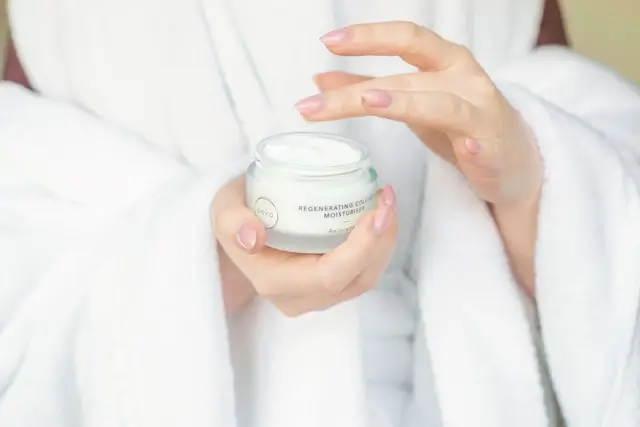
Image by Poko Skincare on Unsplash
Retinoids (including prescription tretinoin and over-the-counter retinol) have the strongest evidence base for stimulating collagen production and improving fine lines [1], but they’re also the most likely ingredient in this routine to cause dryness, redness, and peeling a real problem for skin with an already-compromised barrier.
If retinol is tolerated, using it every 2–3 nights rather than nightly, and applying it after moisturizer (sandwich method), can reduce irritation while retaining some benefit; this trades off some effectiveness for tolerability.
For those who don’t tolerate retinol well, a few alternatives have real, if more limited, evidence:
- Bakuchiol In the most-cited head-to-head trial (n=44, 12 weeks), 0.5% bakuchiol twice daily produced improvements in wrinkles and hyperpigmentation statistically comparable to 0.5% retinol once nightly, with significantly less scaling and stinging reported in the retinol group [2].
- Niacinamide As above, has independent trial support for improving fine lines, tone, and barrier function, and is one of the best-tolerated active ingredients available [4].
- Peptides and growth-factor products Evidence for peptides and growth-factor products is more limited and product-specific than the evidence for established retinoids.
Night Cream and Eye/Lip Care
A richer night moisturizer with emollients, ceramides, and peptides can suit mature skin’s lower oil production. The thin skin around the eyes and lips shows aging changes early and benefits from a dedicated, gentle product applied with light patting rather than pulling or tugging.
Addressing Specific Concerns
Hyperpigmentation and Dark Spots
Consistent sun protection prevents new spots from forming; niacinamide and vitamin C have supporting evidence for gradually fading existing pigmentation, and gentle acids (like mandelic acid) can help with surface discoloration over time. If pigmentation is persistent or bothers you significantly, it’s worth discussing with a dermatologist rather than relying solely on over-the-counter products.
Volume Loss
Skincare cannot restore volume lost from fat-pad changes in the face that’s a structural change no topical product reverses. Peptide-containing products and consistent hydration can modestly improve skin texture and appearance, but if volume loss is a significant concern, that’s a conversation for an in-person consultation with a dermatologist, not a skincare routine.
Increased Sensitivity
Introduce new products one at a time, roughly two weeks apart, so you can identify what’s causing any reaction. Patch-test new products on your inner arm before applying to your face.
Fragrance, essential oils, and alcohol are common irritants worth avoiding if your skin is reactive. If irritation persists despite a simplified routine, that’s worth a dermatology visit rather than continued trial and error.
Building a Routine: A Reasonable Starting Point
Rather than starting with everything at once, a simple sequence like this lets you identify what your skin actually tolerates:
- Gentle cleanser
- Moisturizer (morning and evening)
- Sunscreen SPF 30+ (morning)
From there, add one new product every couple of weeks: a hydrating serum, then an antioxidant serum, then a retinoid or alternative, then gentle exfoliation watching for redness, dryness, stinging, or breakouts as signs to slow down or step back.
No single routine works for everyone; skin type, sensitivity, budget, and specific concerns all shape what makes sense for you.
Related:
- How Menopause Changes Your Skin: What Happens and What Helps
- Retinol vs Bakuchiol: Which Anti-Aging Ingredient Works Better After 40?
- Foods for Glowing Skin: 10 Nutrient-Dense Choices
- For product recommendations, visit the Detoxoz Shop. Affiliate relationships are disclosed on applicable product-review pages.
References
- American Academy of Dermatology guidance on sunscreen use, skin cancer risk, and retinoid use (aad.org).
- Dhaliwal S, Rybak I, Ellis SR, et al. Prospective, randomized, double-blind assessment of topical bakuchiol and retinol for facial photoageing. British Journal of Dermatology. 2019;180(2):289-296.
- Brincat M, Moniz CF, Studd JWW, et al. Sex hormones and skin collagen loss in menopausal women. British Medical Journal (Clin Res Ed). 1987;294(6579):1256-1258. Corroborated by later work summarized in Viscomi C, et al. Managing menopausal skin changes: a narrative review. Journal of Cosmetic Dermatology. 2025.
- Bissett DL, Oblong JE, Berge CA. Niacinamide: a B vitamin that improves aging facial skin appearance. Dermatologic Surgery. 2005;31(7 Pt 2):860-865.