Key Takeaways
- Bone broth provides collagen precursor amino acids (glycine, proline, hydroxyproline), gelatin, and minerals; its benefits are real but narrower than popular claims suggest.
- Gelatin content varies dramatically depending on bone type and cooking time chicken feet and beef knuckles produce far more gelatin than marrow bones or store-bought broth.
- Evidence supports modest indirect contributions to gut health and collagen synthesis; evidence does not support cartilage rebuilding, liver detox, or wrinkle reversal.
- People with histamine intolerance, gout, or chronic kidney disease should exercise caution.
- Consistent regular consumption as part of a varied diet is more meaningful than occasional large servings.
Search for bone broth benefits online and you’ll find claims that it heals the gut, rebuilds joints, detoxifies the liver, and reverses skin aging. Most of those claims are exaggerated.
Bone broth does contain collagen-derived amino acids, gelatin, and minerals but the scientific evidence supports a much narrower list of benefits than the wellness marketing implies. This guide separates what bone broth is likely to do from what current human research has not yet confirmed.
- Does Bone Broth Actually Work?
- Bone Broth Claims vs. Evidence
- What Bone Broth Actually Contains
- How Much Gelatin Does Bone Broth Actually Contain?
- Bone Broth and Gut Health: What the Evidence Shows
- Bone Broth Compared to Similar Options
- How to Make Bone Broth That Actually Delivers
- Who Should Exercise Caution
- Related Posts
- Frequently Asked Questions
Does Bone Broth Actually Work?
Yes but probably not in the way social media suggests.
Current evidence indicates bone broth:
✔ Provides glycine, proline, and hydroxyproline collagen precursor amino acids
✔ Supplies gelatin (if properly prepared from collagen-rich bones)
✔ Contributes minerals including calcium, magnesium, and phosphorus
✔ May modestly support gut barrier function through glutamine content
Evidence remains limited or absent for:
✘ Directly rebuilding joint cartilage
✘ Clinically healing intestinal permeability (“leaky gut”)
✘ Reversing wrinkles or skin aging
✘ Liver detoxification
Bone Broth Claims vs. Evidence
| Claim | Evidence Level | Notes |
| Supports collagen precursor supply | Moderate | Provides glycine, proline, hydroxyproline |
| Supports gut barrier function | Emerging | Via glutamine; human RCTs limited |
| Improves skin hydration/firmness | Indirect | Amino acids may support collagen synthesis |
| Rebuilds cartilage | Weak | No direct human trial evidence |
| Detoxifies the liver | No direct evidence | Glycine supports liver pathways generally |
| Improves joint pain | Preliminary | Small studies; insufficient for firm conclusions |
What Bone Broth Actually Contains

Gelatin and Collagen Precursors
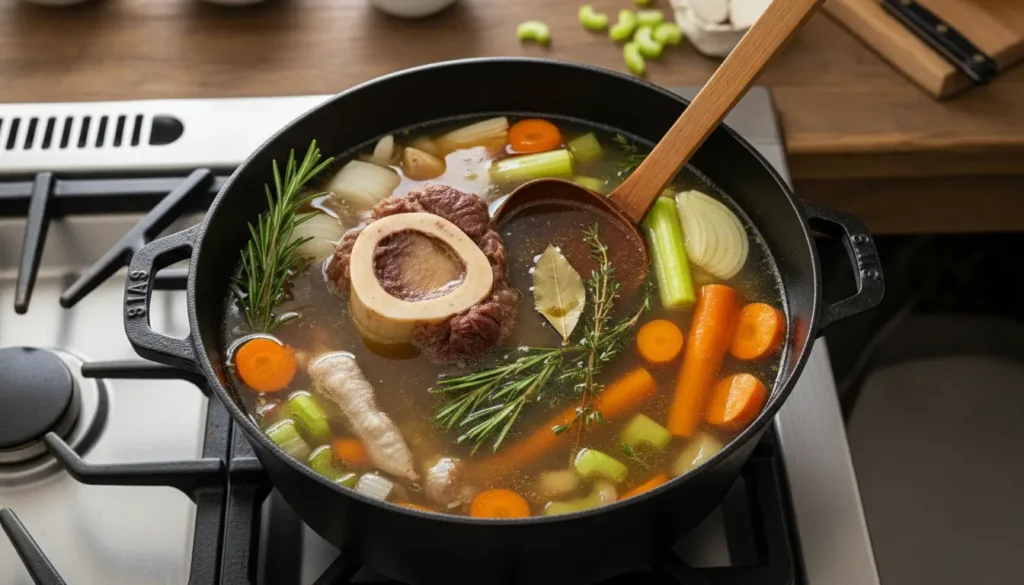
When collagen-rich bones and connective tissue simmer for extended periods, collagen breaks down into gelatin rich in glycine, proline, and hydroxyproline. These are the specific amino acids your body uses as raw material for collagen synthesis.
The critical distinction: consuming gelatin does not deliver intact collagen to skin or joints. Like all dietary proteins, it is broken down during digestion into amino acids. What bone broth provides is an unusually concentrated source of the specific amino acids needed for collagen production more relevant than general protein intake, but less direct than injectable collagen or standardised oral collagen peptide supplements.
A 2015 study published in the Journal of the Science of Food and Agriculture confirmed meaningful concentrations of glycine, proline, and hydroxyproline in long-simmered bone broth preparations while also noting that concentrations varied considerably between batches and methods.
Minerals
Long simmering with added acid draws calcium, magnesium, and phosphorus from bone matrix into the liquid. Adding apple cider vinegar before heating enhances this extraction. Bioavailability appears reasonable, though bone broth is not a reliable replacement for targeted mineral supplementation when deficiencies are confirmed.
Glutamine and Glycine
Bone broth provides glutamine a preferred fuel source for intestinal epithelial cells and glycine, which has documented effects on sleep quality and liver detoxification pathway support. These are the key compounds behind interest in bone broth for gut health and recovery.
How Much Gelatin Does Bone Broth Actually Contain?
This is the question most articles don’t answer specifically and it matters enormously for understanding what you’re actually getting.
Properly made bone broth gels when refrigerated. The firmness of that gel is the most practical indicator of gelatin concentration. Here is how different bone types and preparations compare:
| Bone Type / Source | Relative Gelatin Yield | Notes |
| Chicken feet | Very high | Highest collagen density per weight |
| Beef knuckles / joints | High | Most recommended for beef broth |
| Chicken carcass (with cartilage) | Moderate to high | Good all-round choice |
| Marrow bones (beef) | Low | Rich flavour; limited gelatin |
| Store-bought “bone broth” (no gel) | Negligible | Often stock with labelling |
| Store-bought premium (gels when cold) | Moderate | Reasonable if genuinely gelatinous |
The gel test: Refrigerate a small amount of cooled broth overnight. If it sets to a firm jelly, gelatin content is substantial. If it remains liquid, gelatin extraction was minimal regardless of what the recipe or label claims.
Properly prepared bone broth should become jelly-like after refrigeration. If it stays completely liquid, that usually indicates low gelatin extraction or a broth made primarily from meat rather than collagen-rich connective tissue.
This is one of the most common reasons people try bone broth and notice no difference. The product they’re using contains very little of what they’re seeking.
Bone Broth and Gut Health: What the Evidence Shows

Intestinal permeability the degree to which the gut lining allows substances into the bloodstream is a real, clinically recognised phenomenon associated with inflammatory bowel conditions and other digestive disorders. The phrase “leaky gut syndrome” as a standalone diagnosis is less consistently recognised medically, though the underlying concept of barrier dysfunction is accepted.
The proposed mechanism for bone broth is that glutamine and glycine support tight junction integrity between intestinal epithelial cells. This has biological plausibility: glutamine is well-documented as essential fuel for gut cells, and its depletion is associated with barrier dysfunction in clinical settings.
What remains less established: whether consuming bone broth in normal dietary quantities produces measurable improvements in intestinal permeability in otherwise healthy adults. High-quality RCTs specifically on bone broth and gut permeability are limited. The evidence is considerably stronger for pharmaceutical-grade glutamine supplementation than for food-based glutamine from broth.
Bone Broth Compared to Similar Options
Bone Broth vs. Collagen Peptide Supplements
| Factor | Bone Broth (Homemade) | Collagen Peptide Supplement |
| Collagen precursor amino acids | Yes variable concentration | Yes standardised and measured |
| Additional nutrients | Minerals, glutamine, glycine | Primarily collagen peptides |
| Clinical evidence for skin | Indirect | Direct RCTs exist |
| Cost | Low | Moderate to high |
| Convenience | Requires preparation | Ready to consume |
| Best for | General nutrition, culinary use | Targeted collagen supplementation |
For targeted skin collagen goals, oral collagen peptide supplements have more direct clinical evidence because dose is consistent and the trials are controlled. Our collagen supplement guide covers clinical research. Bone broth and collagen supplements are complementary, not interchangeable.
Bone Broth vs. Regular Chicken or Beef Stock
Standard chicken or beef stock is made primarily from meat and vegetables with minimal bone simmering time typically 2–4 hours. This produces a flavourful liquid but very little gelatin.
Stock that remains liquid when refrigerated is nutritious but does not provide the collagen precursors or gut-supporting amino acids associated with true bone broth. The terms are often used interchangeably on labels, but the products are genuinely different.
Bone Broth vs. Gelatin Powder
Gelatin powder (unflavoured, food-grade) is essentially concentrated bone broth minus the water and minerals. It provides very high concentrations of glycine, proline, and hydroxyproline per gram more efficiently than broth.
If the specific amino acid content is your primary goal, gelatin powder mixed into warm liquid achieves this more economically. Bone broth offers additional minerals and broader nutritional context that gelatin powder does not.
Bone Broth vs. Protein Powder
Protein powder (whey, casein, plant-based) provides total protein efficiently but lacks the specific amino acid profile of bone broth particularly the high glycine and hydroxyproline content.
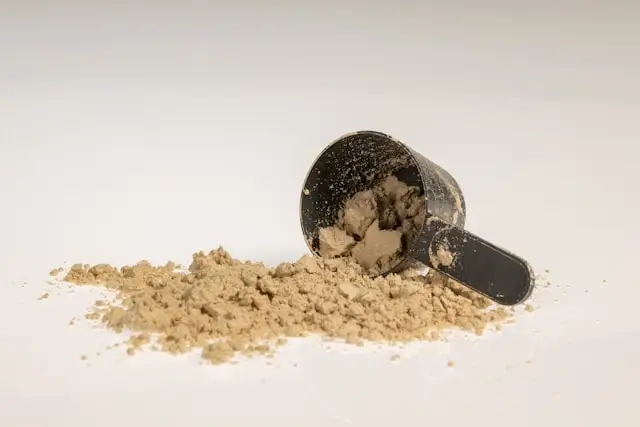
Standard protein powders are dominated by branched-chain amino acids (leucine, isoleucine, valine) optimised for muscle protein synthesis, not collagen production. For general protein intake, either works. For collagen-specific amino acid supply, bone broth and gelatin are more relevant.
How to Make Bone Broth That Actually Delivers
The full recipe and step-by-step method is covered in detail in our dedicated bone broth recipe guide. The key principles that determine whether your broth will actually gel:
- Use the right bones: Chicken feet, beef knuckles, and cartilage-rich joints are highest in collagen. Marrow bones alone produce a flavourful but low-gelatin result.
- Add acid before heating: 2 tablespoons of apple cider vinegar, soak 30 minutes before heating. Enhances mineral and gelatin extraction significantly.
- Simmer low and long: Chicken 12–18 hours, beef 24–36 hours. A pressure cooker achieves moderate results in 3–4 hours for those prioritising convenience.
- Don’t boil: A rolling boil produces cloudy, bitter broth and may degrade some amino acids. Maintain the lowest possible simmer.
- The gel test: Refrigerate overnight. Firm set = good gelatin content. Liquid = try longer cooking time or add more cartilage-rich bones.
Who Should Exercise Caution
Histamine intolerance: Long-simmered bone broth is high in histamine, a by-product of protein breakdown over extended cooking. People sensitive to histamine who may experience headaches, skin flushing, or digestive symptoms should test cautiously with small amounts of short-simmered broth.
Gout: Bone broth contains purines that metabolise to uric acid. For people with gout or hyperuricaemia, regular bone broth consumption may not be advisable without discussing with a healthcare provider.
Chronic kidney disease (CKD): The protein and mineral content (particularly phosphorus and potassium) in bone broth warrants medical guidance for people managing kidney disease, who often require careful mineral restriction.
Sodium restriction: Commercial bone broths can be high in sodium. Check labels if you’re managing blood pressure or fluid retention.
Related Posts
- Best Collagen for Skin: What Actually Works for Anti-Aging
- Gut-Skin Connection: The Science Behind Acne & Digestion
- Morning Habits That Prevent Wrinkles
Frequently Asked Questions
Can you drink bone broth every day?
For most healthy adults, yes daily consumption is safe and may provide cumulative benefit from consistent amino acid and mineral intake. One to two cups daily is the amount used in most traditional dietary contexts. People with histamine intolerance, gout, or kidney disease should consult a healthcare provider before making bone broth a daily habit.
Is chicken bone broth better than beef?
Neither is categorically better; they have different strengths. Chicken bone broth (especially with feet included) typically gels more readily and has a lighter flavour. Beef bone broth from knuckles provides substantial gelatin and higher mineral content. Both supply the collagen precursor amino acids; choice comes down to flavour preference and availability of quality bones.
Does boiling longer always increase collagen content?
Not indefinitely. Extended simmering (24–48 hours for beef) does increase gelatin extraction, but at very long cooking times some amino acids begin to degrade. The sweet spot for beef is generally 24–36 hours at a bare simmer; for chicken, 12–18 hours. Boiling (rather than simmering) at any duration degrades more amino acids and produces a bitter, cloudy result without proportionally more gelatin.
Can bone broth break a fast?
Yes bone broth contains calories from protein and fat, which raises insulin and ends a metabolic fast. For intermittent fasting protocols where the goal is ketosis or complete caloric restriction during the fasting window, bone broth breaks the fast. Some fasting approaches allow it specifically because its minimal caloric load and amino acid content are considered low impact, but this is a personal protocol decision rather than a universal rule.
Can bone broth replace collagen powder?
Partially. Both provide collagen precursor amino acids, but collagen peptide powders deliver a standardised, concentrated dose that’s been specifically studied in clinical trials for skin and joint outcomes. Bone broth provides similar amino acids alongside minerals and glutamine, with more variability in concentration. For general nutritional support, bone broth is a reasonable dietary choice. For targeted skin collagen outcomes with measured doses, standardised collagen peptides have stronger direct evidence.
Does frozen bone broth lose nutrients?
Minimally. Freezing is one of the best preservation methods for bone broth; it maintains amino acid content and mineral profile well. There may be very minor degradation of heat-sensitive compounds, but the practical difference between fresh and properly frozen-and-thawed bone broth is negligible for nutritional purposes.
Bone broth deserves neither the hype nor the dismissal it often receives. It isn’t a miracle food, but it is a nutrient-rich traditional food that supplies collagen-derived amino acids, gelatin, and minerals in a form that fits naturally into a balanced diet.
If your goal is healthier skin or better joint function, think of bone broth as nutritional support not a replacement for evidence-based medical care or clinically studied collagen supplements. Made from the right bones, simmered long enough to gel, and consumed regularly as part of a varied diet, it earns a place in the kitchen on its own terms.
References:
- Journal of the Science of Food and Agriculture Amino acid composition of bone broth preparations (Alcock et al., 2015)
- PubMed Glutamine and intestinal epithelial barrier function: clinical mechanisms review
- Nutrients Glycine and sleep quality: randomised controlled trial evidence
- National Institutes of Health Collagen: dietary sources, synthesis, and supplementation
- British Journal of Nutrition Dietary protein sources and collagen precursor amino acid availability