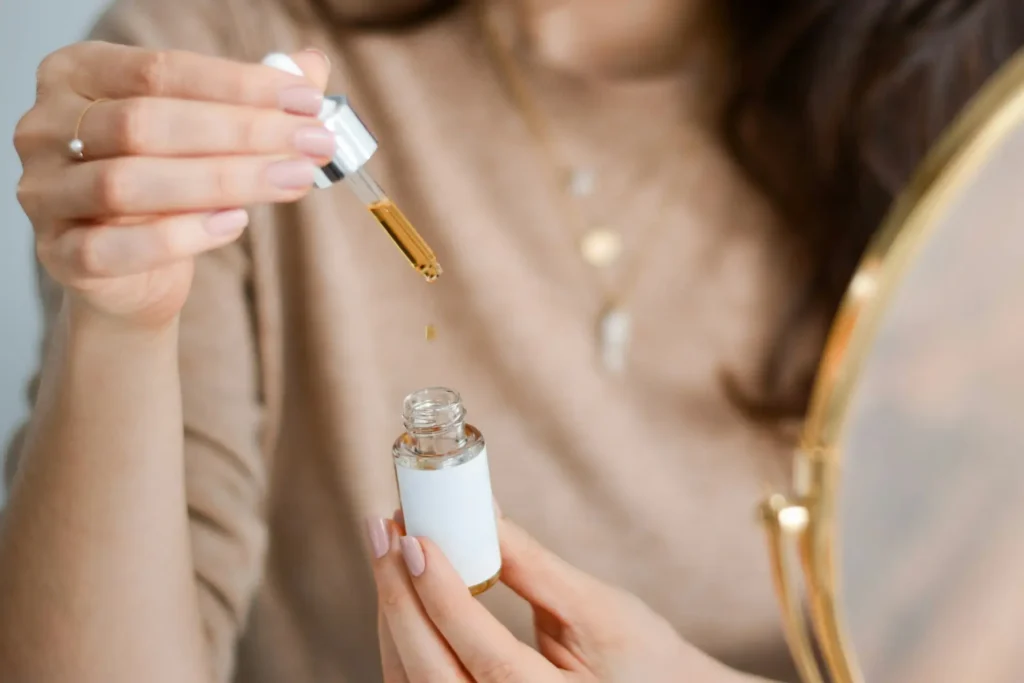
Quick answer: Apply vitamin C serum first, on clean, dry skin, then follow with hyaluronic acid. Vitamin C’s active form, L-ascorbic acid, needs a low pH to absorb properly, while hyaluronic acid works at almost any pH and helps lock in that hydration afterward. Finish with moisturizer, and SPF in the morning.
Key Takeaways
- Order: Vitamin C goes on first, on clean skin. Hyaluronic acid follows. This is the sequence most board-certified dermatologists recommend, and it’s rooted in basic product chemistry, not personal preference.
- Why: L-ascorbic acid (the most researched, most effective form of vitamin C) needs an acidic environment to penetrate skin. Layering it under something with a higher, neutral pH can blunt its absorption.
- The exception: If your vitamin C is an oil-based serum or emulsion, the “thin to thick” rule takes over instead, and a watery hyaluronic acid step may come first.
- The overlooked detail: Hyaluronic acid works best on slightly damp skin. Letting your vitamin C dry down completely and then applying HA to bone-dry skin can undercut hydration, even when the order is technically correct.
- After 40: Skin barrier function and natural hyaluronic acid production both decline with age, which makes correct layering (and the moisturizer step after it) more important, not less.
- Why This Question Trips Up So Many Routines
- The Science Behind the Order
- Morning Routine: Step by Step
- Evening Routine: Step by Step
- What If Your Vitamin C Isn't a Watery Serum?
- Can You Mix Hyaluronic Acid and Vitamin C in One Layer?
- Common Mistakes Worth Avoiding
- Myth vs. Fact
- Why This Matters More After 40
- Who Benefits Most From This Combination
- Who May Want to Be Cautious or Adjust the Routine
- When to See a Dermatologist
- Frequently Asked Questions
- Should I apply vitamin C before hyaluronic acid every time, with no exceptions?
- Do I need to wait between applying vitamin C and hyaluronic acid?
- Does the order change between morning and evening routines?
- What if my hyaluronic acid product also contains vitamin C?
- Can using hyaluronic acid after vitamin C reduce irritation?
- Is this order different for mature or perimenopausal skin?
- Making This Routine Work for You
Why This Question Trips Up So Many Routines
If you’ve stood in front of your bathroom mirror holding two bottles, unsure which one goes on first, you’re not alone. It’s one of the most common questions in skincare, and the confusing part is that both answers you’ll find online sound reasonable.
Some sources say hyaluronic acid should go first because it’s a humectant that needs damp skin to do its job. Others say vitamin C should go first because it needs to reach skin directly, without anything sitting between it and the surface. Both are describing something real. The disagreement is really about which rule takes priority, and that depends on chemistry, not opinion.
Here’s the short version: for most people using a standard water-based L-ascorbic acid serum and a standard hyaluronic acid serum, vitamin C goes first. Below, we’ll walk through exactly why, when the order flips, and how to avoid the mistake that undoes the benefit of doing this “correctly.”
The Science Behind the Order
Two separate skincare principles are at play here, and understanding both helps the routine make sense instead of feeling like a memorized rule.
Rule 1: Layer thin to thick. Lighter, more watery formulas generally go before heavier, richer ones so each product can reach the skin instead of being blocked by a previous layer.
Rule 2: pH-dependent ingredients go on clean, bare skin. L-ascorbic acid is the gold-standard, most-studied form of topical vitamin C, and it’s also the most finicky. Research on its formulation has found it needs a low pH, generally below 3.5, to cross the outer skin layer effectively. If you apply something with a more neutral pH first, it can raise the skin’s surface pH just enough to interfere with how well the vitamin C penetrates afterward.
Hyaluronic acid doesn’t have this limitation. It’s effective across a much wider pH range, so applying it after vitamin C doesn’t reduce its own performance. That’s the deciding factor: vitamin C has a narrow window to work in, and hyaluronic acid doesn’t, so vitamin C gets priority.
There’s also a practical, complementary reason dermatologists mention: applying hyaluronic acid after vitamin C helps hydrate skin that vitamin C can occasionally leave feeling slightly tight or dry, especially at higher concentrations. Think of it less as “order for order’s sake” and more as absorption first, comfort and hydration second.
Morning Routine: Step by Step
| Step | Product | Why It Goes Here |
| 1 | Gentle cleanser | Removes oil and debris without stripping the skin barrier |
| 2 | Vitamin C serum | Applied to clean, dry skin so L-ascorbic acid can absorb at its ideal pH |
| 3 | Wait 60–90 seconds | Lets the serum absorb before the next layer |
| 4 | Hyaluronic acid serum | Applied while skin is still slightly cool and just barely damp from the vitamin C step, not bone dry |
| 5 | Moisturizer | Seals in the hydration hyaluronic acid has drawn to the skin |
| 6 | Sunscreen, SPF 30 or higher | Always the final step; non-negotiable, since vitamin C supports but never replaces sun protection |
A note on step 4: this is where a lot of routines quietly lose effectiveness. Hyaluronic acid is a humectant, meaning it pulls water toward itself rather than supplying moisture on its own.
If it’s applied to skin that has gone completely dry after the vitamin C step, it has less surface moisture to draw on and can occasionally pull water from deeper skin layers instead. A quick mist of water or hydrating toner between steps 3 and 4 solves this.
Our guide on why hyaluronic acid sometimes makes skin feel drier covers this mechanism in more depth if you’ve noticed that effect yourself.
Evening Routine: Step by Step
The order stays largely the same at night, with one common adjustment: many people reserve vitamin C for mornings, when its antioxidant, environmental-protection benefits matter most, and use retinol or another treatment ingredient at night instead.
| Step | Product | Why It Goes Here |
| 1 | Cleanser (double cleanse if wearing sunscreen or makeup) | Fully removes the day’s products |
| 2 | Treatment step (vitamin C on alternating nights, or retinol/exfoliating acid) | Applied to clean, dry skin for full absorption |
| 3 | Hyaluronic acid serum | Applied to skin that’s still slightly damp |
| 4 | Richer night moisturizer | Locks in hydration overnight |
If you use both vitamin C and retinol, most dermatologists recommend alternating nights rather than layering them together, since both are potent actives and combining them can increase irritation, particularly for skin that’s already more reactive after 40.
What If Your Vitamin C Isn’t a Watery Serum?
Not every vitamin C product is a thin, water-based L-ascorbic acid serum, and the order above assumes that’s what you’re using. A few common exceptions:
- Oil-based or emulsion vitamin C: Follow the thin-to-thick rule instead. Apply your watery hyaluronic acid step first, then the oil-based vitamin C product, then moisturizer.
- A combined vitamin C + hyaluronic acid serum: This is common, and it removes the ordering question entirely. Apply it as your single serum step, then move on to moisturizer and SPF.
- Vitamin C derivatives (like magnesium ascorbyl phosphate or ascorbyl glucoside): These are more stable and less pH-dependent than pure L-ascorbic acid, which makes the exact order somewhat more flexible, though applying them first on clean skin is still the simplest, most reliable approach.
Can You Mix Hyaluronic Acid and Vitamin C in One Layer?
Yes. There’s no chemical conflict between the two ingredients, and combining them, whether in one product or applied back-to-back, is considered safe for most skin types. Many well-formulated vitamin C serums already include hyaluronic acid for exactly this reason: it offsets any dryness or tightness that vitamin C alone can sometimes cause.
Common Mistakes Worth Avoiding
- Applying vitamin C over moisturizer or SPF. This blocks absorption almost entirely. Vitamin C needs direct contact with clean skin.
- Skipping the moisturizer step after hyaluronic acid. Without something to seal it in, the water hyaluronic acid draws to the skin surface simply evaporates, leaving skin no better hydrated than before.
- Assuming “more serums” means better results. Layering four or five actives at once increases the odds of irritation without proportionally increasing benefit. A focused two-to-three-step serum routine is usually more effective and easier to stick with.
- Using an oxidized (browned or orange-tinted) vitamin C serum. Once L-ascorbic acid oxidizes, it loses much of its antioxidant activity. Store vitamin C in a cool, dark place and replace it if the color or smell changes.
- Skipping the patch test. This matters more than most routines account for, especially with a new vitamin C concentration.
Myth vs. Fact
| Myth | Fact |
| Vitamin C and hyaluronic acid cancel each other out. | They don’t interact negatively. Hyaluronic acid works across a wide pH range, so it isn’t affected by the acidity vitamin C needs. |
| Hyaluronic acid should always go first because it’s “just hydration.” | Order depends on formulation and pH sensitivity, not on which ingredient sounds gentler. For standard water-based products, vitamin C’s absorption needs come first. |
| Once you find the right order, exact timing between steps doesn’t matter. | Applying hyaluronic acid to skin that’s gone bone-dry after vitamin C can reduce its effectiveness, even with the “correct” order. A light mist or slightly damp skin makes a real difference. |
| A higher vitamin C percentage is always better. | Beyond a certain concentration (commonly cited around 20% for L-ascorbic acid), additional strength mainly adds irritation risk rather than additional benefit, particularly for more reactive or maturing skin. |
Why This Matters More After 40
Skin changes with age in ways that make correct layering more relevant, not less. Estrogen decline during perimenopause and menopause is associated with reduced collagen production, a thinner skin barrier, and lower natural hyaluronic acid content in the skin. In practice, that often means:
- Skin loses hydration faster, so sealing in humectants with a proper moisturizer step matters more.
- The skin barrier is more easily irritated, so introducing a new vitamin C concentration gradually (a few times a week before daily use) is a reasonable, cautious approach.
- Combining hydrating ingredients like hyaluronic acid with barrier-supportive ones like ceramides, ideally in the moisturizer step, tends to make the whole routine more comfortable and sustainable long term.
For a broader framework that fits vitamin C and hyaluronic acid into a full daily routine, our skincare routine guide for women over 40 and anti-aging ingredient guide walk through how these ingredients work alongside retinoids, peptides, and SPF.
Who Benefits Most From This Combination
- People looking to address dullness, uneven tone, or early sun damage alongside dehydration or fine lines.
- Anyone whose skin feels tight, flaky, or “papery” after cleansing, since hyaluronic acid directly addresses surface hydration.
- People already using SPF daily, since vitamin C’s antioxidant benefits are most meaningful as a layer of additional protection, not a replacement for sunscreen.
Who May Want to Be Cautious or Adjust the Routine
- Very sensitive, rosacea-prone, or eczema-prone skin may find L-ascorbic acid too irritating at higher concentrations. A gentler derivative, or introducing it slowly, is often a better starting point.
- People actively using strong exfoliating acids or retinoids should generally avoid stacking these with vitamin C in the same routine and consider alternating nights instead.
- Anyone with a known allergy or sensitivity to a specific formulation ingredient (preservatives, fragrance, or a particular derivative) should always patch test a new product before applying it to the full face.
When to See a Dermatologist
Vitamin C and hyaluronic acid are both considered low-risk, well-tolerated skincare ingredients for most adults, but check in with a board-certified dermatologist if:
- You notice persistent redness, stinging, or breakouts that don’t settle within a few uses.
- You have a diagnosed skin condition (rosacea, eczema, dermatitis) and want personalized guidance before adding new actives.
- You’re introducing vitamin C or hyaluronic acid alongside a prescription treatment, such as tretinoin, and aren’t sure how to sequence them safely.
- You want to address deeper hyperpigmentation, melasma, or significant volume loss, since these often benefit from an in-office, individualized treatment plan beyond what over-the-counter serums can achieve.
Frequently Asked Questions
Should I apply vitamin C before hyaluronic acid every time, with no exceptions?
For standard water-based L-ascorbic acid serums, yes. The exception is if your vitamin C product is oil-based or an emulsion, in which case the thinner, watery hyaluronic acid step usually comes first instead.
Do I need to wait between applying vitamin C and hyaluronic acid?
A short wait of 60 to 90 seconds is generally enough for vitamin C to absorb. You don’t need to wait several minutes; most of the initial absorption happens quickly.
Does the order change between morning and evening routines?
No, the underlying logic stays the same. What often changes at night is whether you use vitamin C at all, since many people reserve it for mornings and use retinol or another active in the evening instead.
What if my hyaluronic acid product also contains vitamin C?
Then there’s no ordering decision to make. Combined formulas are designed to deliver both ingredients in one step, and apply as directed, followed by moisturizer and SPF.
Can using hyaluronic acid after vitamin C reduce irritation?
It can help. Vitamin C, especially at higher concentrations, can cause mild tingling for some people. Following it with a hydrating, barrier-friendly hyaluronic acid step can make the overall experience more comfortable, though it isn’t a guaranteed fix for significant irritation.
Is this order different for mature or perimenopausal skin?
The order itself doesn’t change, but the margin for error narrows. Skin that’s already more prone to dryness or sensitivity benefits more from getting each step right, including not letting skin go bone-dry between the vitamin C and hyaluronic acid steps.
Making This Routine Work for You
The order matters, but consistency matters more. A simple two-step serum routine you actually use every day will outperform a “perfect” five-step routine you abandon after two weeks.
Start with vitamin C on clean skin, follow with hyaluronic acid while skin still has a little moisture on it, seal everything in with a moisturizer, and don’t skip SPF in the morning. That sequence, done consistently, is what most of the research and clinical guidance behind these two ingredients actually supports.
References
- American Academy of Dermatology Association. How to maximize results from anti-aging skin care products.
- American Academy of Dermatology Association. How to test new skin care products (patch testing guidance), 2021.
- Crisan, D., et al. (2015). The role of vitamin C in pushing back the boundaries of skin aging: an ultrasonographic approach. Clinical, Cosmetic and Investigational Dermatology.
- Casale, J., et al. (2023). Hyaluronic acid, a promising skin rejuvenating biomedicine: a review of recent updates and pre-clinical and clinical investigations on cosmetic and nutricosmetic effects. International Journal of Biological Macromolecules.
This article is for general educational purposes and isn’t a substitute for personalized medical advice. If you have a diagnosed skin condition or a specific concern, please consult a board-certified dermatologist.