Image by Ambitious Studio* | Rick Barrett on Unsplash
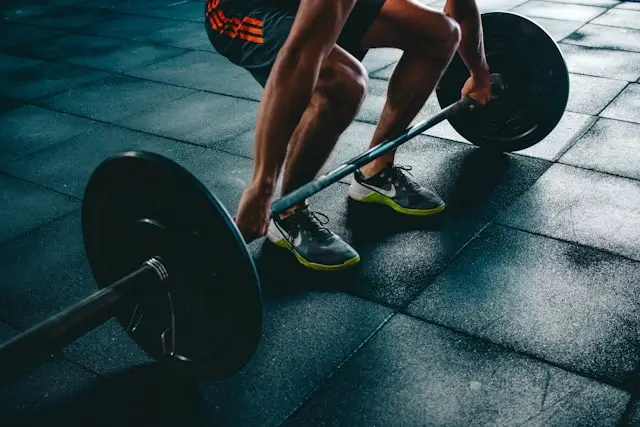
Exercise can temporarily increase testosterone levels, particularly after some moderate- to high-intensity resistance training sessions. However, this short-term rise does not necessarily translate into higher resting testosterone levels over time.
The hormonal response depends on factors such as exercise intensity, duration, age, sex and recovery.
Key Takeaways
- The post-workout rise is temporary. Resistance training can cause a short-term increase in testosterone, but the size and duration of the response vary.
- Exercise does not reliably raise resting testosterone in healthy men. Regular training remains beneficial for strength, fitness and overall health, even without a lasting hormonal increase.
- A testosterone spike does not predict muscle growth. Consistent training, appropriate nutrition and recovery matter more than trying to maximize a temporary hormone response.
Before you start: This article explains how testosterone responds to exercise. It is not a guide to diagnosing or treating low testosterone. For the wider picture of how stress and lifestyle relate to testosterone, see our stress and low testosterone connection guide.
- What Happens to Testosterone During and After a Workout
- Why Some Workouts Raise Testosterone More Than Others
- Does Lifting Weights Raise Resting Testosterone?
- Does the Post-Workout Spike Build Muscle?
- Can Very High Training Loads Affect Testosterone?
- What the Evidence Looks Like
- When Symptoms Call for Medical Evaluation
- Bottom Line
- References
What Happens to Testosterone During and After a Workout
Researchers distinguish between the acute response, the change during and shortly after exercise, and the resting level, measured when you have not just exercised. These are different outcomes, and a temporary rise does not necessarily mean your baseline testosterone will increase.
A 2026 systematic review of 15 randomized controlled trials involving 251 participants found that resistance exercise generally produced a larger testosterone increase and a slower return toward baseline than aerobic exercise.
After aerobic exercise, levels typically returned toward baseline within about an hour. However, results varied with exercise type, intensity, measurement methods and participant characteristics.
Why Some Workouts Raise Testosterone More Than Others
Testosterone responses vary with exercise intensity, duration, the amount of muscle involved and individual characteristics. The timing and method of hormone measurement can also affect the results.
These findings do not establish a single workout formula that reliably maximizes testosterone. Instead, they suggest that the immediate hormonal response depends on the session and the person performing it.
Does Lifting Weights Raise Resting Testosterone?
This is the question many people are most interested in, and the evidence is less encouraging than fitness marketing often suggests.
Healthy, insufficiently active men: A systematic review and meta-analysis of 11 randomized trials involving 421 men found that exercise training had a negligible effect on resting total testosterone. The results did not differ significantly by exercise type, age or body mass.
Men with obesity or type 2 diabetes: A 2024 meta-analysis reported an increase in testosterone following aerobic training among men in these groups. However, the evidence was based on a small number of studies and participants, so the findings should be considered preliminary.
Overall, regular exercise does not reliably raise resting testosterone in healthy men. Results in specific populations may differ, but exercise should not be treated as a proven treatment for testosterone deficiency. Most of the long-term evidence discussed here comes from studies of men and should not be generalized to women.
Does the Post-Workout Spike Build Muscle?
A larger hormonal surge after exercise does not necessarily mean greater muscle growth. In a study involving 56 young men who completed a 12-week resistance-training program, acute increases in testosterone and other hormones were not significantly associated with gains in lean body mass or leg-press strength.
The practical takeaway is simple: train for strength, fitness, consistency and enjoyment rather than trying to maximize a temporary hormone peak.
Can Very High Training Loads Affect Testosterone?
Very high training loads do not automatically lower testosterone. However, athletes who consistently consume insufficient energy to support their training and normal physiological needs may develop low energy availability, which can affect hormonal function, health and performance.
The International Olympic Committee’s consensus on Relative Energy Deficiency in Sport describes potential health and performance consequences of problematic low energy availability in male and female athletes. This does not mean that ordinary resistance training or endurance exercise inherently lowers testosterone.
Adequate nutrition, recovery and appropriate training loads matter, especially for athletes experiencing persistent fatigue or declining performance. Our detox fitness guide covers recovery more broadly, while our guide to the best exercise for testosterone after 40 discusses exercise choices in the context of age.
What the Evidence Looks Like
The table below summarizes the main findings discussed in this article.
| Claim | What the research shows | Confidence |
| Resistance exercise can temporarily raise testosterone | A systematic review found a short-term increase after resistance exercise, with considerable variation between studies | Reasonably supported, but variable |
| Testosterone after aerobic exercise returns toward baseline relatively quickly | The reviewed trials generally found recovery within about an hour | Variable across studies |
| Regular exercise reliably raises resting testosterone in healthy men | A meta-analysis of 11 randomized trials found a negligible effect | Evidence does not support a reliable increase |
| Temporary hormone elevations predict muscle or strength gains | A study of young men found no significant association | Not supported by that study |
| Aerobic exercise raises testosterone in men with obesity or type 2 diabetes | A small meta-analysis reported an increase | Preliminary evidence |
When Symptoms Call for Medical Evaluation
Persistent symptoms such as low libido, fatigue or erectile problems can have many causes. Exercise changes cannot confirm or rule out testosterone deficiency.
The Endocrine Society recommends diagnosing hypogonadism only when compatible symptoms or signs occur alongside consistently low testosterone concentrations. Diagnosis generally requires an accurate morning fasting total-testosterone measurement followed by a repeat test to confirm the result.
If you are concerned about low testosterone, seek medical evaluation rather than relying on a workout plan, self-testing or supplements to diagnose or treat the condition.
Bottom Line
Lifting weights can produce a temporary rise in testosterone after some sessions, but regular exercise does not reliably raise resting testosterone in healthy men.
The post-workout spike also does not appear to predict how much muscle you build. Exercise remains valuable for strength, fitness and overall health, but a workout plan is not a substitute for medical assessment when testosterone deficiency is suspected.
Medical disclaimer: This article is educational and does not replace professional medical advice, diagnosis or treatment.
References
- Tu Q, Li G, Wang S. Effect of acute exercise on the dynamics of testosterone levels: PeerJ. 2026;14:e20615.
- Potter NJ, Tomkinson GR, Dufner TS, et al. Effects of exercise training on resting testosterone concentrations in insufficiently active men: J Strength Cond Res. 2021;35(12):3521–3528.
- West DW, Phillips SM. Associations of exercise-induced hormone profiles and gains in strength and hypertrophy in a large cohort after weight training. Eur J Appl Physiol. 2012;112(7):2693–2702.
- Healy R, et al. The effects of aerobic exercise training on testosterone concentration in individuals who are obese or have type 2 diabetes: Sports Med Open. 2024;10:117.
- Bhasin S, Brito JP, Cunningham GR, et al. Testosterone therapy in men with hypogonadism: J Clin Endocrinol Metab. 2018;103(5):1715–1744.
- Mountjoy M, et al. 2023 International Olympic Committee’s consensus statement on Relative Energy Deficiency in Sport (REDs). Br J Sports Med. 2023;57(17):1073–1097.
About the author: João Nanga is a health content strategist and researcher with experience reviewing scientific literature on skin health, digestion, and metabolic wellness.