Key Takeaways
- Vitamin C and niacinamide are among the most evidence-backed natural ingredients for fading dark spots.
- Consistency matters more than concentration daily use over 8–12 weeks outperforms sporadic high-dose applications.
- Sun protection is non-negotiable; without it, even the best natural treatments won’t hold.
- Not all dark spots are the same matching the right remedy to the right cause speeds results.
Dark spots also called hyperpigmentation happen when skin produces too much melanin in one area. This can be triggered by sun exposure, acne scars, hormonal changes, or normal aging. The result is an uneven tone that feels stubborn and, honestly, frustrating. The good news? Several natural remedies for dark spots are backed by real science, not just wellness folklore.
You don’t need a dermatologist prescription to see meaningful results. But you do need the right ingredients, used consistently, with realistic expectations. If you’re curious about how your overall skin health connects to internal factors, our Anti-Aging Guide is a solid place to start.
- What Actually Causes Dark Spots in the First Place?
- 1. Vitamin C The Most Studied Brightening Agent
- 2. Niacinamide Gentle, Effective, and Hard to Mess Up
- 3. Alpha Arbutin A Natural Alternative to Hydroquinone
- Does Kojic Acid Actually Fade Dark Spots?
- 4. Licorice Root Extract Overlooked but Powerful
- 5. Azelaic Acid The Dermatologist's Quiet Recommendation
- 6. Turmeric Old Remedy, New Evidence
- 7. Green Tea Extract (EGCG) Antioxidant Defense from the Inside Out
- Can Home Remedies for Dark Spots on Face Really Work?
- 8. Retinol (Vitamin A) Not Just for Wrinkles
- 9. Exfoliating Acids Glycolic and Lactic for Surface Renewal
- 10. Rosehip Seed Oil Lightweight Support for Even Tone
- 11. Sun Protection The Remedy That Makes All Others Work
- Why Isn't My Dark Spot Treatment Working?
- How the Gut-Skin Connection Affects Hyperpigmentation
- FAQ
What Actually Causes Dark Spots in the First Place?
Before you treat something, it helps to know what you’re dealing with.
Dark spots form when melanocytes the cells that produce pigment go into overdrive. UV radiation is the most common trigger, but post-inflammatory hyperpigmentation (PIH) from acne is just as widespread. Melasma, driven by hormonal shifts, tends to appear across the cheeks and forehead. Age spots cluster on areas with years of cumulative sun exposure.
Each type responds differently to treatment. That’s why “one remedy fits all” rarely works. Knowing your trigger is half the battle.
1. Vitamin C The Most Studied Brightening Agent
Vitamin C (ascorbic acid) is one of the most well-documented natural ingredients for reducing hyperpigmentation. It works by inhibiting tyrosinase, the enzyme responsible for melanin production. Less tyrosinase activity means less pigment deposited in the skin.
A 2017 study published in the Journal of Clinical and Aesthetic Dermatology found that topical vitamin C significantly reduced melanin index scores after 16 weeks of use. Translation: it lightens existing spots and slows new ones from forming.
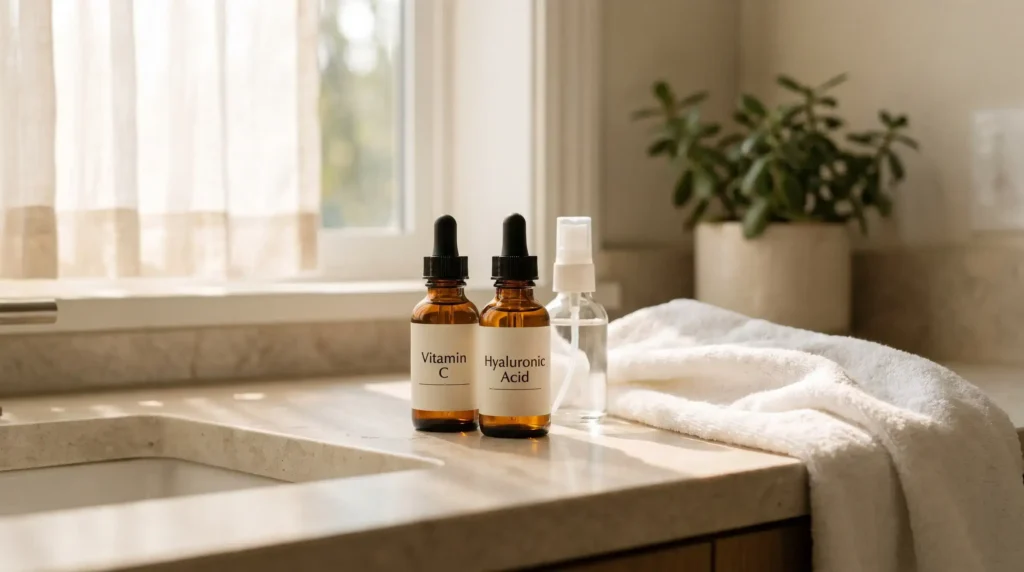
How to use it: Look for serums with 10–20% L-ascorbic acid. Apply in the morning before sunscreen. Vitamin C oxidizes quickly, so store it away from light and heat.
What to expect: Real results take 8–12 weeks. Don’t give up at week three.
2. Niacinamide Gentle, Effective, and Hard to Mess Up
Niacinamide (vitamin B3) is one of those rare ingredients that works for almost every skin type. It reduces melanin transfer from melanocytes to keratinocytes, which is the actual mechanism behind visible brightening.
Clinical research published in the British Journal of Dermatology showed that 5% niacinamide significantly reduced hyperpigmentation compared to vehicle control after 8 weeks. It also reduces redness and strengthens the skin barrier, a real multi-tasker.
Why it stands out: Unlike vitamin C, niacinamide is stable, non-irritating, and plays well with almost everything in your routine.
Concentration sweet spot: 4–10% in serums or moisturizers.
3. Alpha Arbutin A Natural Alternative to Hydroquinone
Hydroquinone is the gold standard for pigmentation in clinical settings, but it comes with concerns around long-term use and sensitivity. Alpha arbutin derived from bearberry, blueberry, and cranberry plants works through a similar mechanism without the side effect profile.
It inhibits tyrosinase activity just like hydroquinone but more gradually and gently. It’s one of the most promising natural alternatives to hydroquinone for dark spots, especially for sensitive skin types or those with PIH from acne.
Usage note: Alpha arbutin works best at concentrations of 1–2%. Higher isn’t always better here.
Does Kojic Acid Actually Fade Dark Spots?
Yes kojic acid, a byproduct of fungal fermentation (notably from sake production), is a well-established tyrosinase inhibitor. It’s been studied for its effects on melasma, sun spots, and PIH, with results comparable to some prescription agents.
A 2021 review in the Journal of Cosmetic Dermatology confirmed kojic acid’s efficacy as a depigmenting agent, particularly when combined with other actives like glycolic acid or vitamin C.
The catch: kojic acid can be irritating at higher concentrations. Start with products at 1% and patch test first, especially if your skin leans sensitive.
4. Licorice Root Extract Overlooked but Powerful
Licorice root contains glabridin, a compound that suppresses UVB-induced pigmentation and inhibits melanin synthesis without the instability of some other actives.
It’s particularly useful for melasma and sun-induced spots. Some formulations also include liquiritin, which disperses melanin already sitting in the skin not just slowing production but helping to break up existing pigment clusters.
Best format: Serums and ampoules with concentrated licorice root extract, ideally paired with niacinamide for a synergistic effect.
5. Azelaic Acid The Dermatologist’s Quiet Recommendation
Azelaic acid is naturally derived from grains like wheat and barley. It selectively inhibits overactive melanocytes while leaving normal pigment cells unaffected which is why it’s particularly effective for PIH without over-lightening surrounding skin.
It’s also anti-inflammatory and mildly exfoliating, making it a strong natural treatment for post-inflammatory hyperpigmentation from acne. Because it targets melanocytes specifically, it’s safer for all skin tones including deeper complexions.
Available formats: Prescription-strength is 15–20%, but 10% over-the-counter formulas still deliver meaningful results for mild-to-moderate dark spots.
6. Turmeric Old Remedy, New Evidence
Turmeric has been used in Ayurvedic skincare for centuries. The active compound, curcumin, has demonstrated antioxidant and anti-inflammatory properties in research. It also inhibits tyrosinase to some degree.
A study in Phytotherapy Research found that a turmeric-containing cream reduced facial hyperpigmentation in participants after 4 weeks. Results were modest but real and the anti-inflammatory effect supports overall skin evenness.
Practical note: Raw turmeric in DIY masks can stain skin and fabric. Opt for stabilized topical curcumin in formulated products for cleaner, more predictable results.
7. Green Tea Extract (EGCG) Antioxidant Defense from the Inside Out
Epigallocatechin gallate (EGCG), the primary polyphenol in green tea, has both antioxidant and melanin-inhibiting properties. UV-induced free radical damage drives a significant portion of sun-related hyperpigmentation and EGCG directly counters this pathway.
Research in Archives of Pharmacal Research showed that topical EGCG application reduced melanin content in UVB-irradiated skin. It’s not a fast-acting brightener, but it adds meaningful protection against future spot formation.
Dual approach: Green tea works well both topically and orally. Drinking 2–3 cups daily supports systemic antioxidant defense while a topical product acts locally.
Can Home Remedies for Dark Spots on Face Really Work?
Some can and some are overhyped. The honest answer depends on which remedies you mean.
Ingredients like vitamin C from citrus, niacinamide from fortified skincare, and green tea are all rooted in science and show measurable effects when used correctly. DIY options like raw lemon juice or baking soda, on the other hand, can damage the skin barrier and worsen pigmentation through irritation the opposite of what you want.
The rule of thumb: if a “natural” remedy is highly acidic or abrasive without a pH buffer or carrier, it’s more likely to irritate than improve. Stick with well-formulated products that use these natural ingredients at tested, stable concentrations.
8. Retinol (Vitamin A) Not Just for Wrinkles
Retinol is derived from vitamin A and while it’s not exclusively “natural” in origin, it’s found in many food sources and has decades of clinical backing. It works on dark spots by accelerating cell turnover pushing pigmented cells up and off the surface faster while inhibiting melanin transfer.
It’s one of the strongest evidence-based natural remedies for dark spots when used consistently at the right concentration. The science behind anti-aging skin care ingredients explains why retinol remains a cornerstone recommendation.
Start slow: Begin with 0.25–0.5% retinol two to three nights per week. Skin purging and dryness are common early on but usually settle within 4–6 weeks.
9. Exfoliating Acids Glycolic and Lactic for Surface Renewal
Alpha hydroxy acids (AHAs) like glycolic and lactic acid are derived from natural sources sugarcane and milk respectively. They work by dissolving the bonds between dead skin cells, accelerating shedding of the pigmented surface layer.
This doesn’t eliminate melanin deposits deep in the skin, but it speeds up the natural removal process significantly. Combined with inhibitors like niacinamide or vitamin C, AHAs make a measurable difference in how to remove dark spots naturally at home.
Key consideration: AHAs increase UV sensitivity. Always follow exfoliating acid use with SPF without this step, you’ll create more spots than you’re removing.
10. Rosehip Seed Oil Lightweight Support for Even Tone
Rosehip seed oil is rich in vitamin C precursors and trans-retinoic acid (a natural form of vitamin A). It’s been studied for its effects on post-surgical scars and skin tone evening, with one double-blind trial showing significant improvement in scar color and skin tone after 12 weeks.
It’s not a heavy hitter on its own, but as a carrier oil in a routine that includes active ingredients, it contributes antioxidant protection and supports skin repair. It’s also non-comedogenic, which makes it suitable for acne-prone skin dealing with PIH.
11. Sun Protection The Remedy That Makes All Others Work
This isn’t technically a brightening ingredient, but no honest article about natural remedies for dark spots can leave it out. UV exposure is the number one cause of hyperpigmentation and the number one reason treatments fail.
Without daily SPF 30 or higher, every ingredient on this list is fighting uphill. Melanin production will outpace melanin inhibition. You’ll fade spots during the week and re-trigger them every weekend.
Mineral sunscreens zinc oxide and titanium dioxide are particularly relevant here because they’re natural mineral compounds, not chemical UV filters. They sit on the skin’s surface and physically block UV rays rather than absorbing them.
Apply every morning. Reapply midday if you’re outdoors.
Why Isn’t My Dark Spot Treatment Working?
The most common reason natural treatments for hyperpigmentation fail isn’t the ingredient, it’s the application. Inconsistent use, too-low concentrations, skipping sunscreen, or using the wrong product for the wrong type of dark spot all undermine results. Most evidence-backed treatments require 8–12 weeks of daily use before significant fading is visible.
If you’ve been consistent for three months without improvement, it may be time to reconsider whether the product concentration is therapeutic, or whether you’re dealing with deeper dermal pigmentation that requires professional intervention.
How the Gut-Skin Connection Affects Hyperpigmentation
This one surprises people. Chronic inflammation partly driven by gut health can upregulate melanin production systemically. If your skin keeps producing new spots despite topical treatment, internal inflammation may be part of the picture.
Research into the gut-skin connection shows that digestive health influences inflammatory signaling that reaches the skin. Supporting gut health through diet reducing processed sugar, increasing fiber, prioritizing fermented foods may help reduce the inflammatory background that feeds hyperpigmentation.
It’s not a quick fix, but it’s a real layer of support that topical treatments can’t address on their own.
Related Posts
- How skin aging actually works and what the science says you can do
- The gut-skin connection: how digestion affects acne and skin tone
FAQ
How long does it take to fade dark spots naturally?
Most evidence-backed natural ingredients like vitamin C and niacinamide require 8 to 12 weeks of consistent daily use before visible fading occurs. Deeper or older spots may take up to 6 months. Consistent SPF use is essential to prevent spots from reforming during treatment.
Are natural remedies for dark spots safe for dark skin tones?
Yes, but with care. Ingredients like niacinamide, azelaic acid, and alpha arbutin are well-tolerated across all skin tones. Avoid aggressive exfoliants or high-acid DIY treatments without pH buffering; These can cause irritation-induced PIH, which is especially visible on deeper complexions.
What natural ingredients work best for acne-caused dark spots?
Post-inflammatory hyperpigmentation from acne responds well to niacinamide, azelaic acid, and vitamin C used alongside gentle AHAs. Consistency is more important than strength. Avoid picking blemishes; It deepens and widens PIH significantly.
Can I use multiple natural brightening ingredients at the same time?
Yes, many work synergistically. Vitamin C in the morning paired with niacinamide or retinol at night is a well-supported stack. Avoid layering multiple acids simultaneously or using high-percentage vitamin C with niacinamide in the same step, as this can reduce efficacy of both.
Do age spots on the face respond to natural treatments?
They can, but they’re often the most resistant type of hyperpigmentation because they tend to be dermal rather than epidermal. Vitamin C, kojic acid, and regular AHA exfoliation help. Results are slower expect a 3–6 month timeline with consistent use and daily SPF.
Natural remedies for dark spots work best when you treat them as a system, not a shortcut. The right ingredient, the right concentration, consistent application, and above all daily sun protection. That combination outperforms any single “miracle” ingredient every time.
Start simple. Stay consistent. Give your skin the time it actually needs.
References
- Telang PS. Vitamin C in Dermatology. Indian Dermatology Online Journal. 2013. PubMed
- Boo YC. Mechanistic Basis and Clinical Evidence for the Applications of Kojic Acid. Journal of Cosmetic Dermatology. 2021.
- Hakozaki T, et al. The effect of niacinamide on reducing cutaneous pigmentation and suppression of melanosome transfer. British Journal of Dermatology. 2002.
- Healthline. Hyperpigmentation: What You Need to Know.